
Last updated November 23, 2026
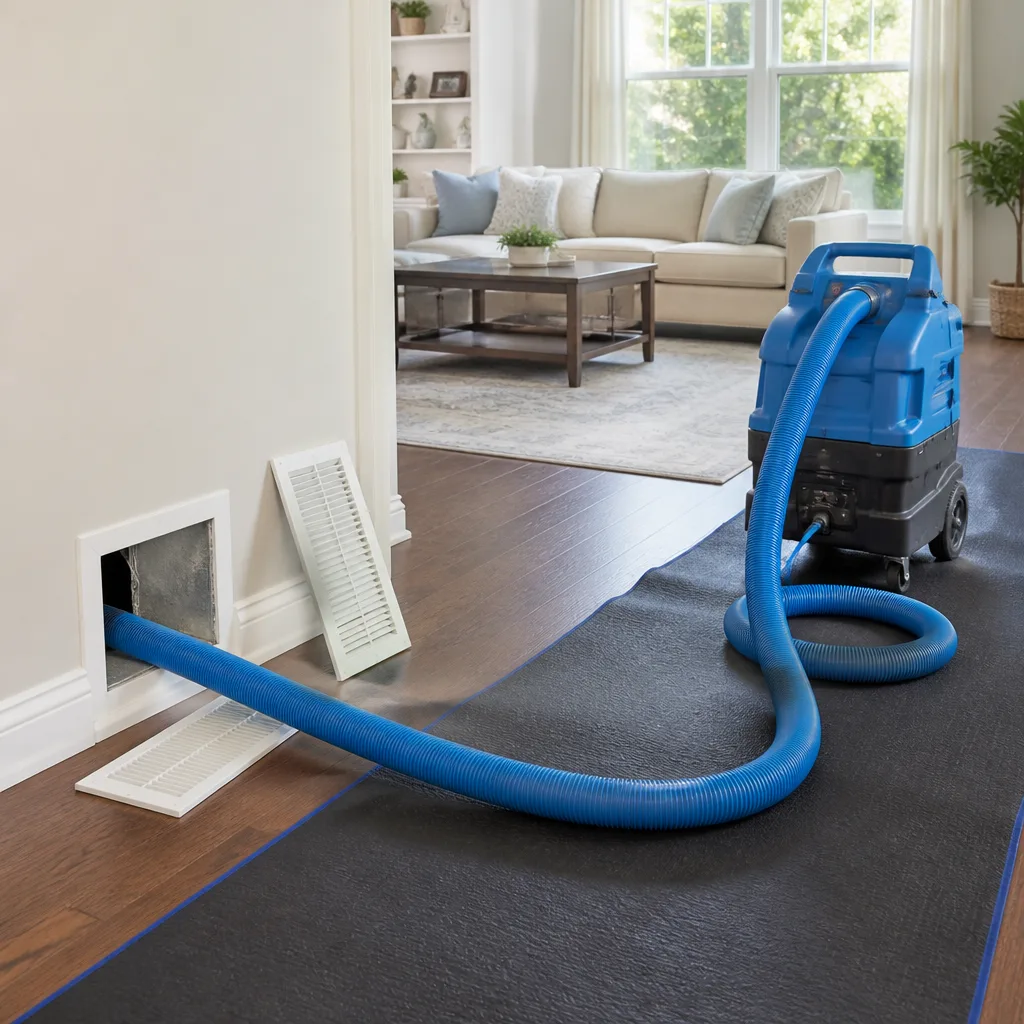 Whole-home duct cleaning
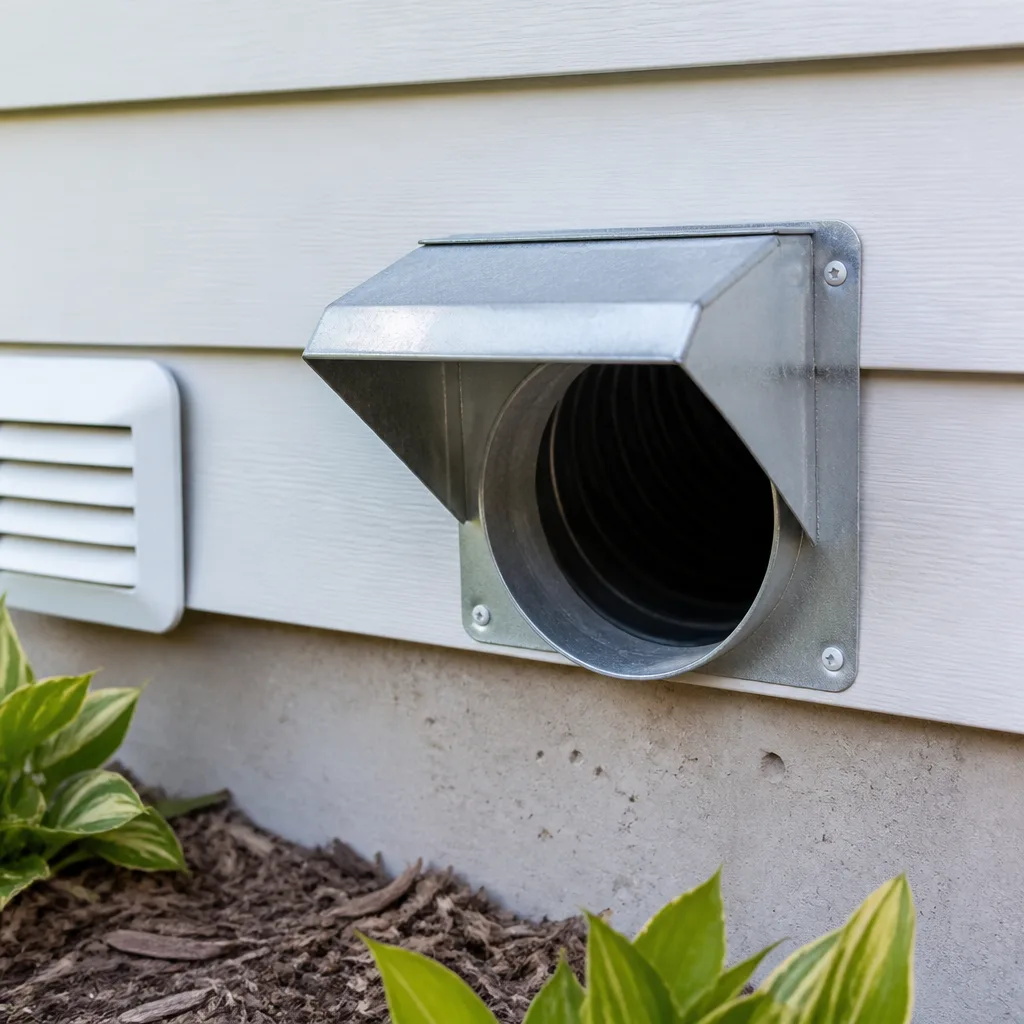 Dryer vent cleaning
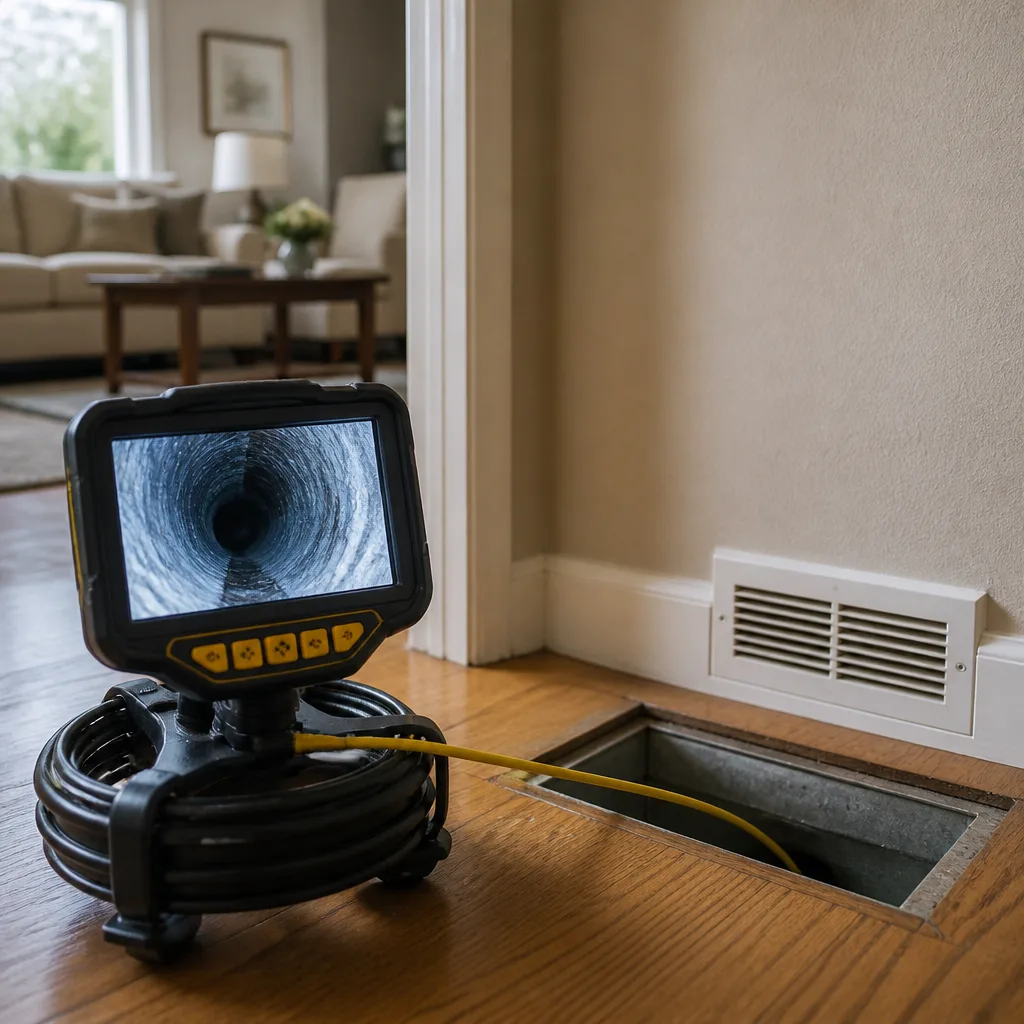 Camera inspection
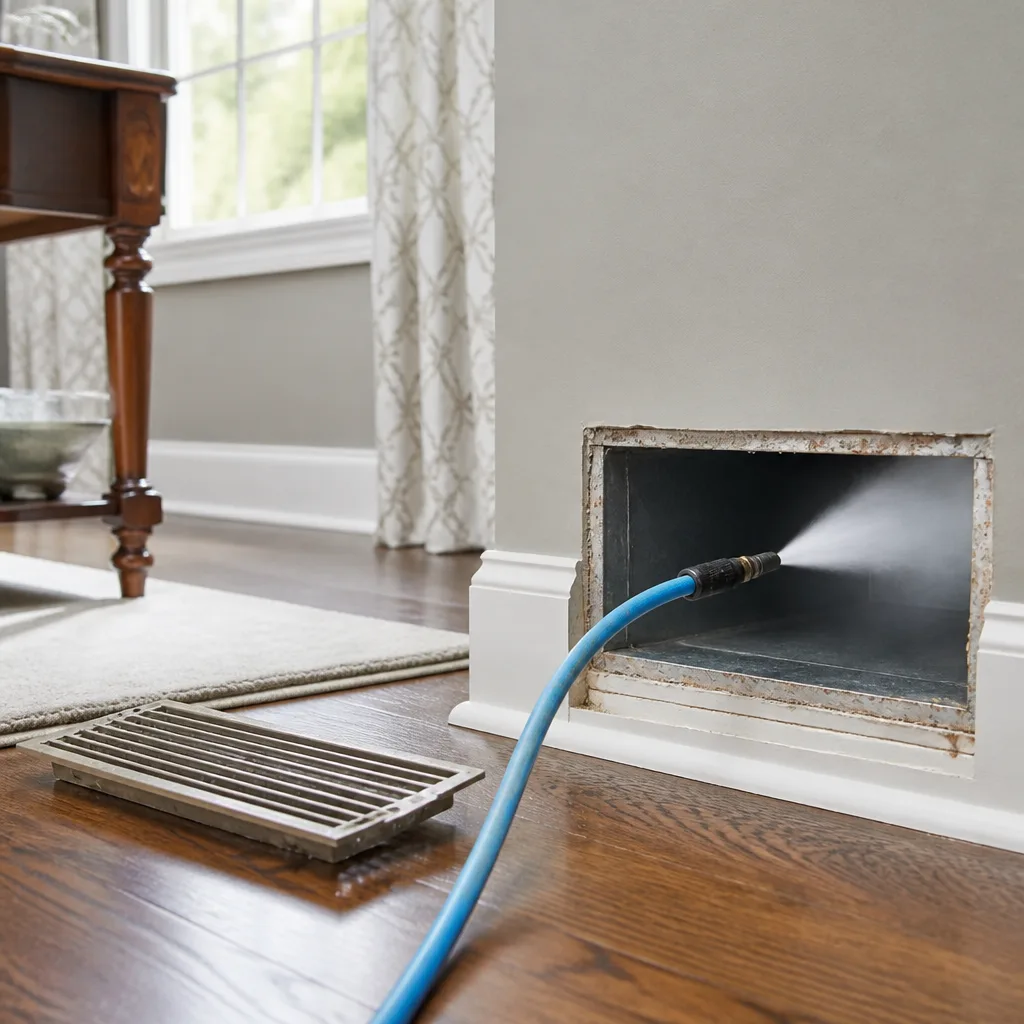 Sanitizing & deodorizing
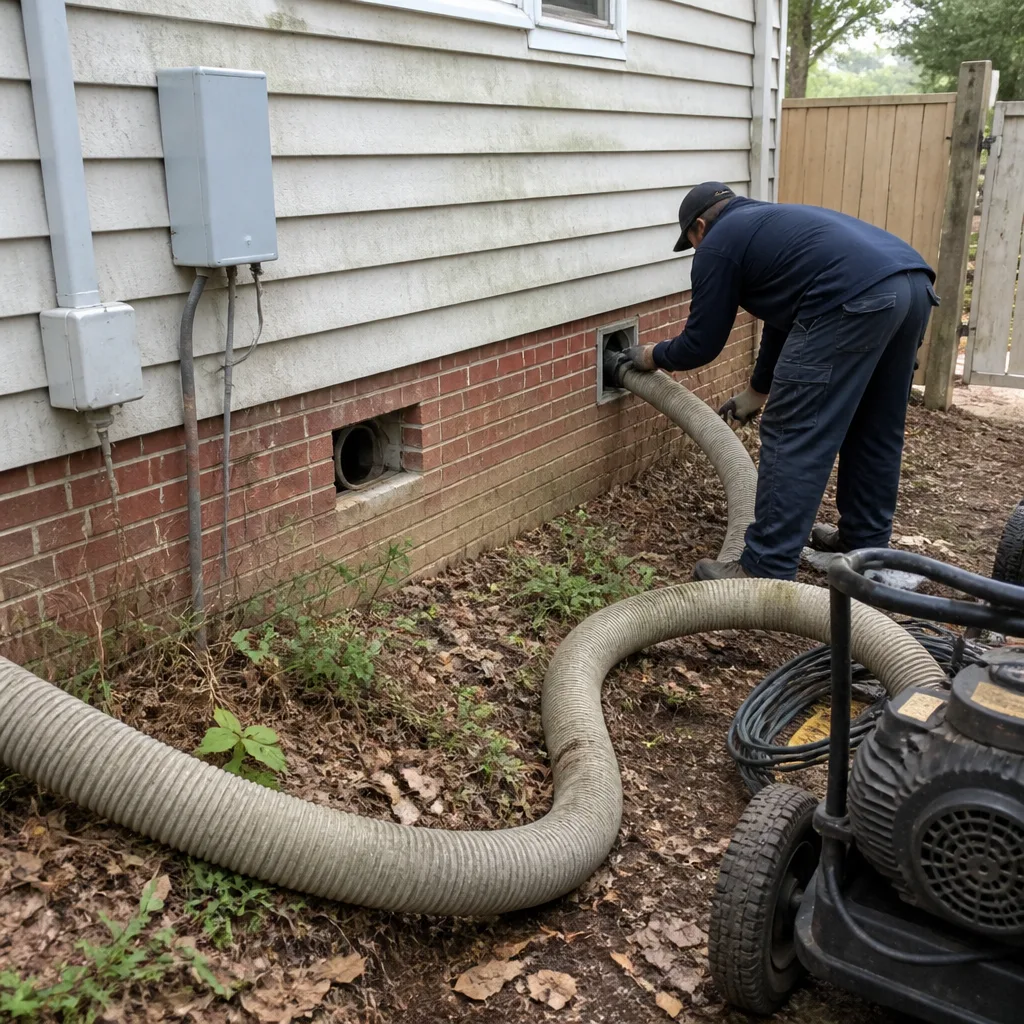
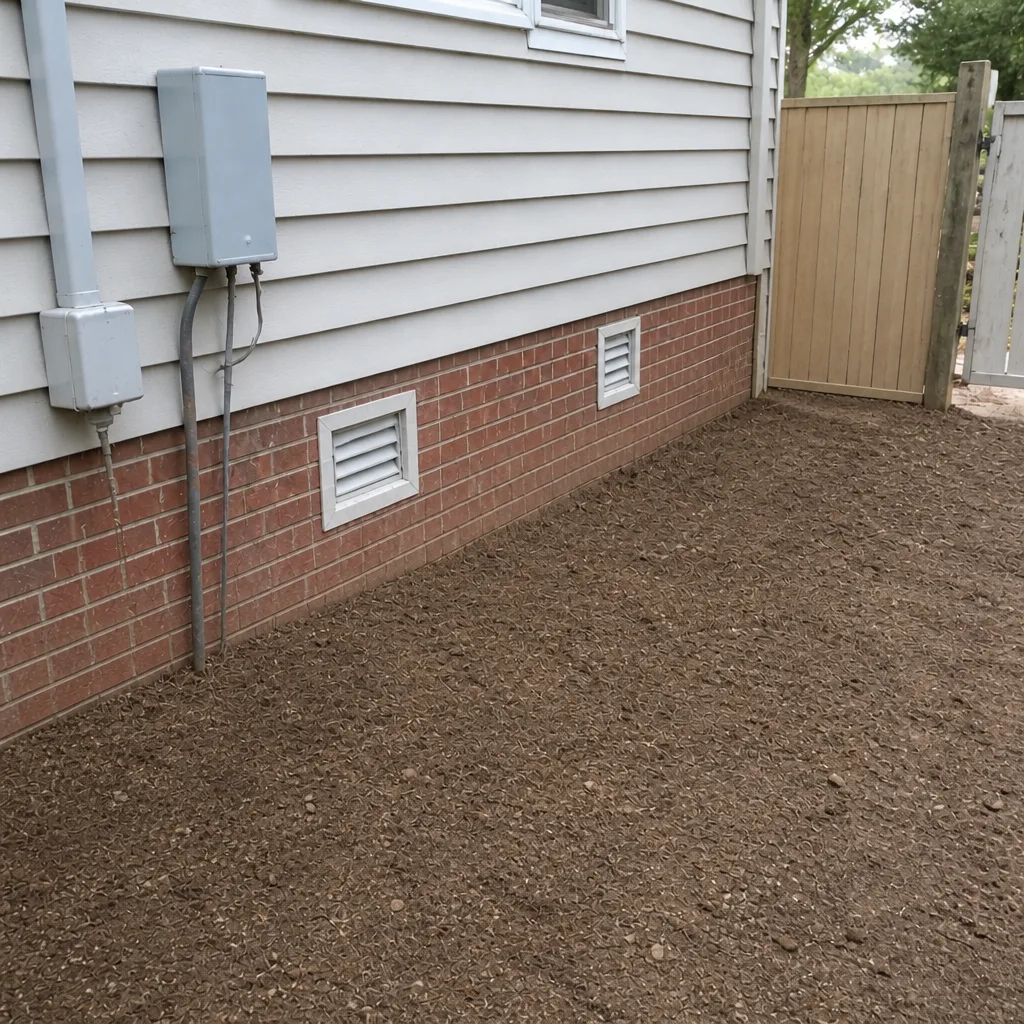
Whole-system duct and dryer vent check with before-and-after photos - you see exactly what came out of your vents
That "$99 whole-house special" is a bait ad - the real number appears once they are in your hallway, or the "clean" is a shop-vac at the register. We photograph the inside of your ducts before and after instead.
Air Duct Cleaning Maintenance Checklist for Southeast Raleigh Homeowners
The most common maintenance mistake we see in Southeast Raleigh isn’t skipping duct cleaning. It’s changing the air filter on schedule and assuming that means the whole forced-air system is healthy. A clean filter tells you almost nothing about what’s happening behind the walls: a flex duct that’s slipped off its collar under the house, a return grille drawing attic air, or a dryer vent packed with lint a few feet from the laundry room. This guide gives you a real maintenance rhythm for Southeast Raleigh homes, built around the failure points we actually find here rather than generic advice copied from a national chain. You’ll get monthly, annual, and multi-year task cadences, self-checks you can do without tools, and clear signals for when a professional visit is warranted.
Quick Answer
A working air duct maintenance checklist for Southeast Raleigh homes covers filter changes every 1-3 months, a visual inspection of every register and return grille at each season change, annual professional duct and HVAC cleaning, dryer vent inspection at least once a year, and a full duct repair and sealing review every 3-5 years. The trigger points matter more than the intervals: Southeast Raleigh’s heavy spring pollen and humid summer stretches are when hidden problems in the ducts show up as allergy symptoms or higher power bills.
Styles & brands we work with
- Whole-home duct cleaning
- Dryer vent cleaning
- Camera inspection
- Sanitizing & deodorizing
Table of Contents
- The Monthly Checklist: Filters and Basic Checks
- The Seasonal Checklist: Spring Pollen and Summer Humidity
- How to Inspect Registers and Return Grilles Without Tools
- Why Dryer Vent Inspection Is Non-Negotiable in Southeast Raleigh
- The Annual Professional Visit: What It Should Cover
- The Post-Renovation Checklist for Southeast Raleigh Remodels
- DIY vs. Professional: Where the Line Actually Is
The Monthly Checklist: Filters and Basic Checks
The monthly cadence is short and mostly about the filter, but there are two other things worth doing every thirty days. The filter is the one maintenance task most homeowners already handle, sometimes well and sometimes not. The other two steps are what turn filter-changing into actual system monitoring.
Here’s the monthly list:
- Check the filter. Hold it up to a bright window. If you can’t see light through it, replace it. In Southeast Raleigh, the spring pollen season means a filter that lasts three months in January may last only six weeks in April.
- Listen at each return grille for thirty seconds. You’re listening for a whistle, a rattle, or a soft whooshing that changes when the system cycles. A whistle usually means a restricted filter or a partially closed damper; a rattle often points to a loose register frame.
- Check for dust streaks around the register frame. A dark halo around a register means air is escaping around the edge instead of through it, which is a small sealing problem that compounds.
None of these are dramatic. All of them are cheap to act on and expensive to ignore. A filter that clogs and stays clogged forces the blower to work harder, and a register that’s leaking air into the wall cavity is pulling unfiltered air in from wherever it can find it. In Southeast Raleigh’s older ranch homes, that’s often the crawlspace.
The Seasonal Checklist: Spring Pollen and Summer Humidity
Southeast Raleigh has two seasonal pressure points on a forced-air system, and they hit in sequence. Spring brings a heavy pollen load, and summer brings weeks of high humidity that turns any cool surface in the ductwork into a condensation point. The seasonal checklist is built around both.
Spring, before the pollen peak:
- Replace the filter at the start of the season rather than waiting for the calendar reminder.
- Vacuum the return grille face with a brush attachment. Pollen and fine dust accumulate on the grille face and get pulled back into the system every time the blower runs.
- Walk the exterior of the house and confirm no leaf litter or pollen mat is blocking the outdoor condenser intake.
Summer, when humidity peaks:
- Check for condensation on visible duct runs, especially any ductwork in a garage, crawlspace, or unconditioned attic.
- Confirm the condensate drain line is clear. A slow drain backs up, and the moisture sits in the air handler where it becomes a breeding ground for biological growth.
- Smell test each room. A musty note at one register and not the others usually means local moisture in that branch, not a whole-system problem.
Fall and winter are the quieter seasons here, which makes them the right time to schedule a full professional visit before the spring pollen load arrives.
How to Inspect Registers and Return Grilles Without Tools
You can learn a surprising amount about your duct system by looking at the registers and return grilles with no tools at all. The trick is knowing what the patterns mean. Most homeowners see dust and think “cleaning needed.” The pattern of the dust is often more informative than the volume.
Here’s what to look for:
- Uniform gray dust across the fins: normal accumulation. Cleaning is due but nothing specific is wrong.
- Dark dust concentrated on one side of the grille: airflow is uneven, usually because a damper is partly closed or the branch line is undersized. Worth flagging on your next professional visit.
- Black or dark brown staining around the frame: often a sign of moisture in the duct or a leak at the boot where the duct connects to the register. This is a repair and sealing issue, not just cleaning.
- Greenish or white speckling inside the duct throat: biological growth. Stop and call a professional. This is not a homeowner task.
- Visible gaps at the register boot: shine a flashlight along the edge where the duct meets the drywall. A gap of a quarter inch or more means air intended for the room is going into the wall cavity instead.
None of that requires a ladder or a screwdriver. A flashlight and five minutes per register is enough. If you find the dark-staining pattern in more than one room, that’s a strong signal the whole forced-air system needs a proper evaluation before the next heating or cooling season starts.
Why Dryer Vent Inspection Is Non-Negotiable in Southeast Raleigh
Dryer vent inspection belongs on any serious duct maintenance checklist, and in Southeast Raleigh it deserves its own line item. A large share of the housing stock here is townhomes and two-story builds where the laundry room sits deep in the floor plan and the vent run is long, often with two or three elbows. Long runs with multiple bends collect lint faster than the short straight runs common in older ranch construction, and the lint is exactly the fuel a dryer fire needs.
Here’s the checklist item itself:
- Disconnect the dryer vent hose at the back of the dryer once a year and look inside with a flashlight. Lint packing past the first few inches is a red flag.
- Check the exterior vent flap. It should open freely when the dryer runs. A stuck flap means lint or a bird’s nest has blocked the outlet.
- Time a load. If a typical load used to dry in forty-five minutes and now takes seventy, the vent is restricted.
- Feel the exterior vent while the dryer runs. Strong warm airflow is good. A weak trickle or nothing at all means the run is blocked and needs dryer vent cleaning.
If lint is visible more than a few inches inside the hose, or if the exterior flap won’t open, stop using the dryer and call for service. Dryer vent cleaning is often treated as an add-on by duct cleaners; in our experience it’s one of the highest-value items on the whole list and shouldn’t be skipped.
The Annual Professional Visit: What It Should Cover
Once a year, a professional visit should reach the parts of the system you can’t see from the register. That’s the point of the annual cadence – not that the ducts get dirty faster than a year, but that a year is about how often a hidden problem has time to develop into an expensive one.
A complete annual visit covers five things:
- Source removal cleaning of the duct runs and main trunk. Professional-grade equipment matters here; a shop vac doesn’t move enough air to lift settled debris off the duct walls.
- HVAC cleaning of the air handler and evaporator coil. A dirty coil chokes airflow and drives up energy use. This is separate from duct cleaning and often skipped by companies that only do ducts.
- Containment during the work. Look for HEPA filtration and negative-air containment; it’s what keeps the debris in the equipment rather than drifting into the room.
- A visual report of the duct system condition. Ask the technician to point out any disconnected joints, crushed flex runs, or moisture staining.
- A written recommendation if repair or sealing is needed. Not a phone call weeks later with a surprise invoice.
If the system has never had a professional visit, start with a baseline inspection before committing to the annual cycle. The full scope of what a proper annual visit looks like is outlined on our air duct cleaning page. In Southeast Raleigh, scheduling the annual visit in October or November means the ducts are clean going into the pollen load.
The Post-Renovation Checklist for Southeast Raleigh Remodels
Construction dust is different from household dust, and it behaves differently inside a duct system. Drywall dust is fine enough to sail past a standard filter, and it settles into duct joints and vertical runs where a household vacuum will never reach. Southeast Raleigh has a lot of active remodeling, and a renovation project that closes up the house for a few months without duct protection will leave contamination behind long after the drywall is painted.
Here’s what the post-renovation checklist needs:
- Replace the filter the day the contractor leaves. Not the next month. The same day.
- Change the filter again after two to three weeks of system use. That second change catches the fine dust that only lifts once the air starts moving again.
- Look for drywall dust at every register and note which ones have visible residue. If more than one or two registers show it, the whole system needs professional cleaning.
- Check the return grille specifically. Return air is the closest path to the blower, so a dusty return is a strong signal the blower and coil are affected too.
- Schedule professional cleaning before the next heating or cooling season. Drywall dust on the evaporator coil turns into a hard crust once it absorbs moisture, and that’s a costly problem to fix.
If the renovation involved sanding drywall, cutting tile, or refinishing floors, professional HVAC cleaning should be on the punch list before move-in, not after.
DIY vs. Professional: Where the Line Actually Is
The honest answer is that most of this checklist is homeowner work and a few items are genuinely professional. Knowing which is which keeps you from overpaying and, more importantly, from attempting something that could damage the system or hurt you.
Genuinely DIY:
- Changing the filter.
- Vacuuming register and return grille faces.
- Visually inspecting registers for staining and gaps.
- Checking the exterior dryer vent flap.
- Confirming airflow at the exterior dryer vent.
Genuinely professional:
- Source-removal cleaning of the duct runs and main trunk.
- HVAC cleaning of the air handler and evaporator coil.
- Duct repair and sealing, including reconnecting a slipped flex duct and sealing a leaking boot.
- Any work involving visible biological growth or moisture damage.
- Dryer vent cleaning once lint reaches past the first few inches of the hose.
The line isn’t about cost. It’s about what a homeowner can do safely with the tools on hand and what requires professional-grade equipment and containment to do without making the problem worse. A homeowner pulling a disconnected flex duct back onto its collar can create a worse leak than they started with. That’s a sealing job.
Common Mistakes to Avoid
- Assuming the filter is the whole checklist. A clean filter doesn’t tell you whether a duct run under the house has come loose, and in Southeast Raleigh’s older crawlspace homes that’s one of the most common findings.
- Waiting until the ducts smell bad. Odor is one of the last symptoms to show up. By the time you smell a problem, moisture and biological growth have been present for a while.
- Ignoring the dryer vent because the dryer still works. A restricted vent still dries clothes, just slowly, and that slow drying is exactly the lint-packing stage that leads to fire risk.
- Skipping professional cleaning after a renovation. Drywall dust doesn’t clear on its own, and the second filter change is where most homeowners stop too early.
- Letting a company quote a per-vent price. Per-vent pricing rewards getting into a house and then adding vents. A flat per-system price agreed before work starts is the fairer structure.
- Choosing a quote by price alone. A very low quote usually means source removal will be skipped and a shop vac will be used instead of professional equipment. Ask what equipment the company uses and whether the price is per system.
- Scheduling only when it’s convenient. The best time to schedule the annual visit is right before the heavy seasons – early spring for pollen, early summer for humidity. Waiting until mid-July means waiting through the peak.
See the difference
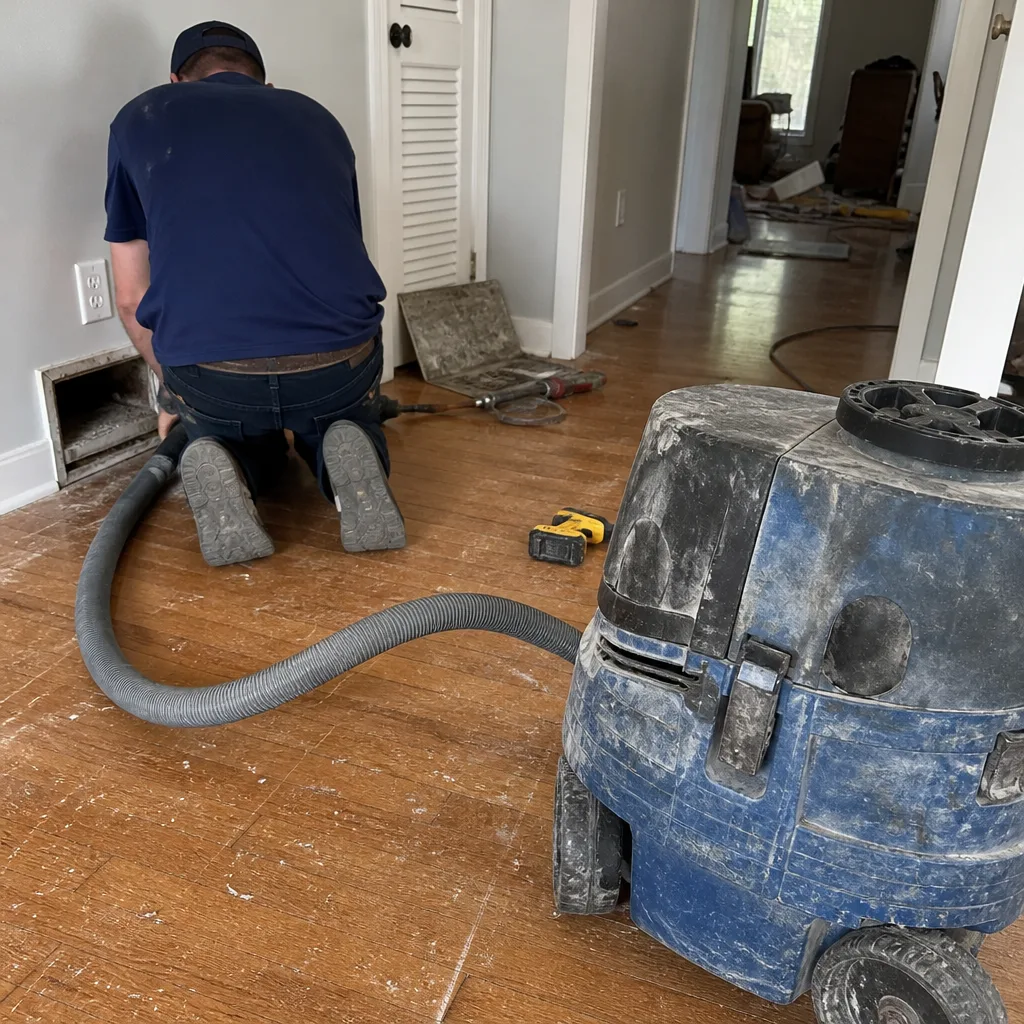 Before
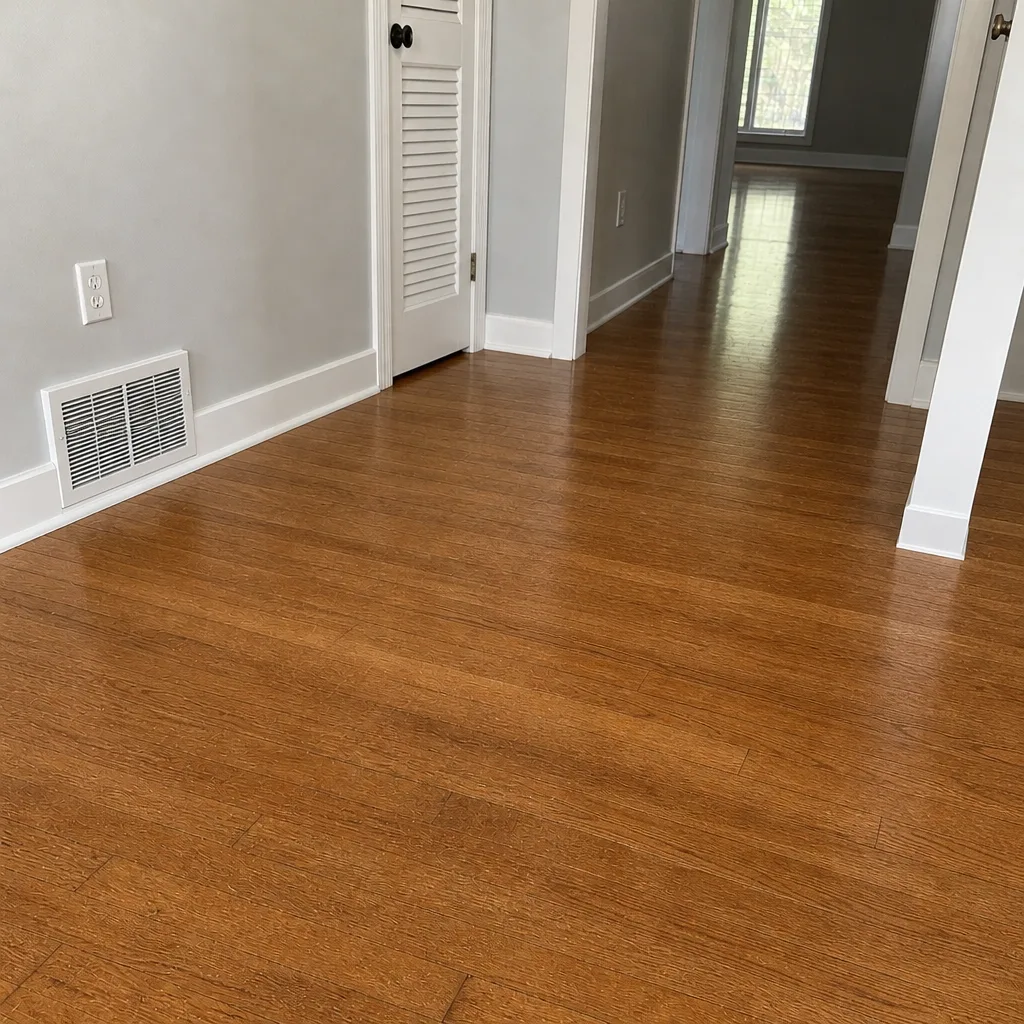 After
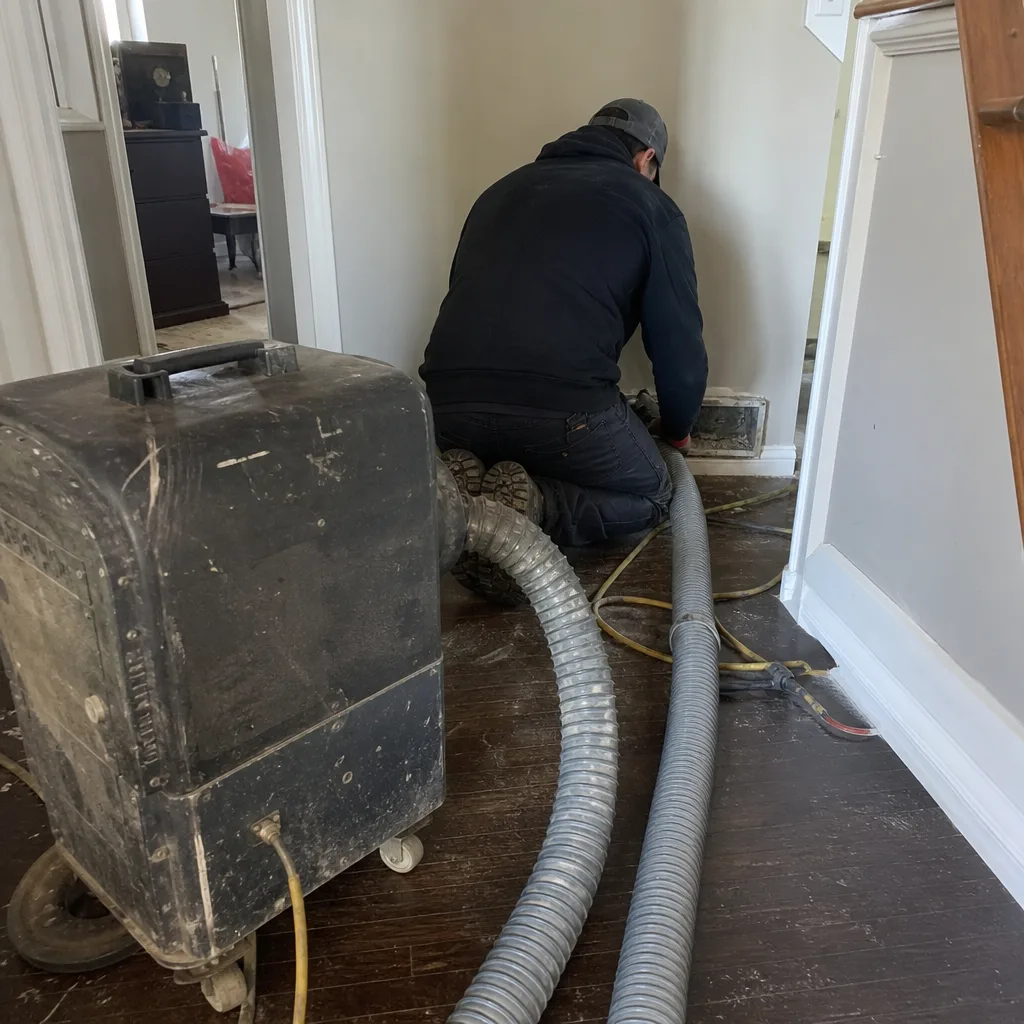 Before
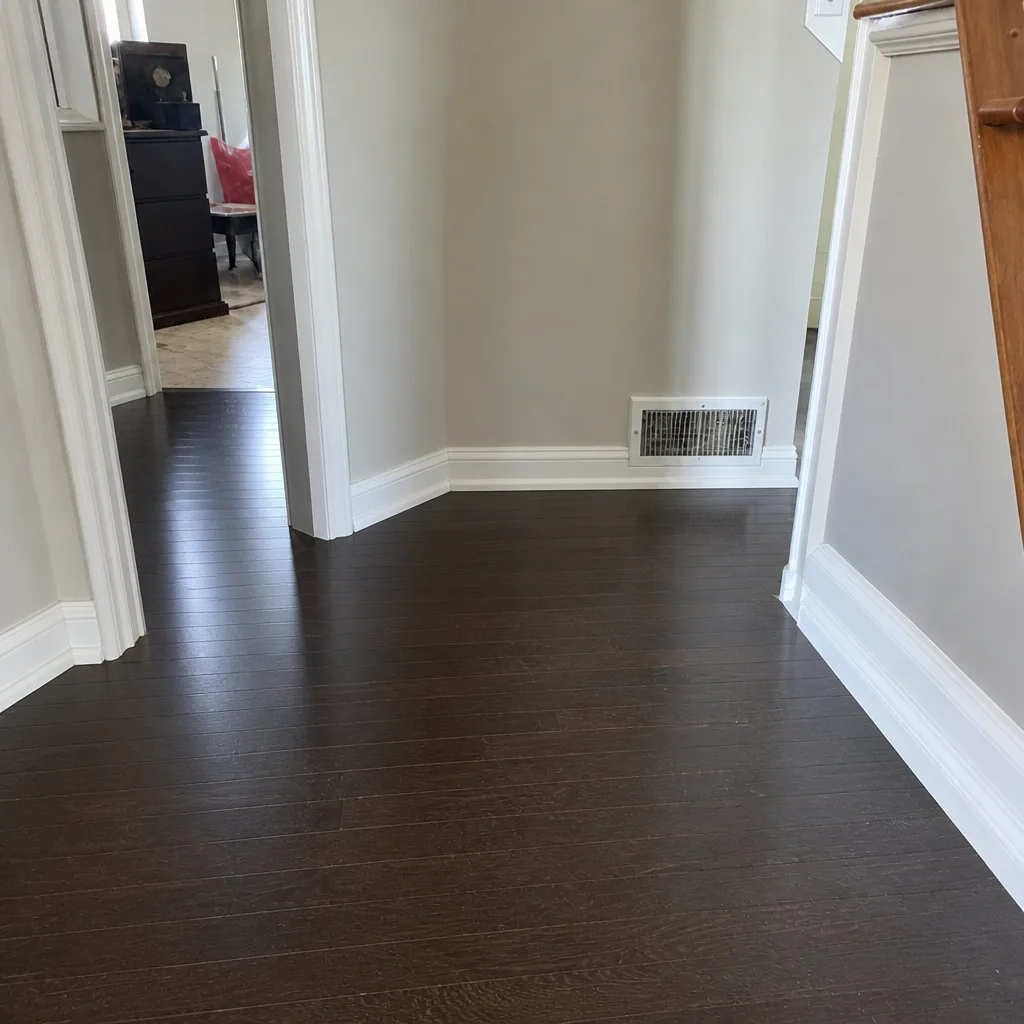 After
 Before
 After
When to Call a Professional
Call a professional when you find dark staining around more than one register, when the exterior dryer vent flap won’t open, when you notice biological growth anywhere in the ductwork, or when the annual visit is due and the system hasn’t had a professional cleaning in years. Also call when the dust pattern in the rooms points to uneven airflow rather than normal accumulation, and after any renovation that generated drywall dust. Air Duct Cleaning Southeast Raleigh offers free estimates in Southeast Raleigh – call (866) 937-7160. We answer 24/7, with fast dispatch from 7am to 7pm, Sunday through Friday. Our technicians have up to 13 years of experience, and we use professional-grade Rotobrush and Nikro equipment with Abatement Technologies HEPA containment so the debris ends up in the machine, not in your living room. Every job is quoted at one flat price per system before work begins, and we’ll show you before-and-after photos so you can see what was actually removed. If the inspection turns up a disconnected or damaged duct, we handle the repair and sealing in the same visit rather than leaving you to find a second contractor. Estimates are free, and you’ll get a written recommendation that separates what needs doing now from what can wait.
Frequently Asked Questions
Every 3-5 years for most homes, and annually if anyone in the household has allergies, if there are pets, or if the home has had a recent renovation. Southeast Raleigh’s heavy spring pollen load pushes the upper end of that range down. A home that’s had drywall work done should be cleaned within a few months of completion, not years.
No. A filter change keeps the blower from working harder and reduces the dust that reaches the coil, but it does nothing about debris that’s settled inside the duct runs or about a duct that’s come loose behind a wall. Treat the filter as the monthly check, not the annual one. Call (866) 937-7160 for a baseline inspection if you’ve never had one – estimates are free.
Three signals: the exterior flap doesn’t open fully when the dryer runs, a typical load takes noticeably longer than it used to, and you can feel only weak airflow at the outside vent. Any of those three means the vent needs cleaning before the next load. Don’t keep running the dryer on a restricted vent.
Yes, if the renovation produced drywall dust, tile dust, or floor refinishing dust. That fine dust gets past the filter and settles into duct joints and the blower, and once it reaches the evaporator coil it turns into a crust that’s expensive to remove. Schedule the cleaning before the next heating or cooling season starts.
Air volume and containment. Professional systems like Rotobrush and Nikro move enough air to lift settled debris off the duct walls, and equipment classes like Abatement Technologies use negative-air containment with HEPA filtration to capture it. A shop vac moves neither enough air nor enough containment. That’s why a very cheap quote usually reflects the equipment, not the quality of the technician.
Cleaning alone doesn’t fix a duct system with leaks. If a flex run has come off its collar or a boot is leaking into the wall cavity, cleaning will make the ducts cleaner but the system will still pull unfiltered air from the attic or crawlspace. Sealing and repair address the root cause. A proper inspection tells you which you actually need, and we quote it as a separate line item so you can decide.
The Bottom Line
The checklist that actually protects a Southeast Raleigh home has three rhythms, not one. Monthly: filter changes and a quick listen at each return grille. Seasonal: pollen-focused filter change in spring, moisture and condensate checks in summer. Every three to five years: a professional cleaning with a duct condition report and repair/sealing review. Dryer vent inspection is a yearly line item in its own right, and a renovation adds a one-off post-project cleaning. What all of this buys you is early detection. A disconnected flex duct, a leaking boot, or a lint-packed dryer vent caught in year one is a small job. Caught in year five it’s a bigger one, sometimes with a moisture or air quality problem attached. That’s the whole point of the checklist.
Air Duct Cleaning Southeast Raleigh handles all five lines – duct cleaning, dryer vent cleaning, HVAC cleaning, air quality and sanitizing, and duct repair and sealing – in a single visit, so the checklist doesn’t need to be split across multiple contractors. Call (866) 937-7160 for a free estimate. We answer 24/7. Fast dispatch from 7am to 7pm, Sunday through Friday. One flat price per system, agreed before work starts, with before-and-after photos so you can see what came out of the system.
Written by the team at Air Duct Cleaning Southeast Raleigh.