
Last updated November 23, 2026
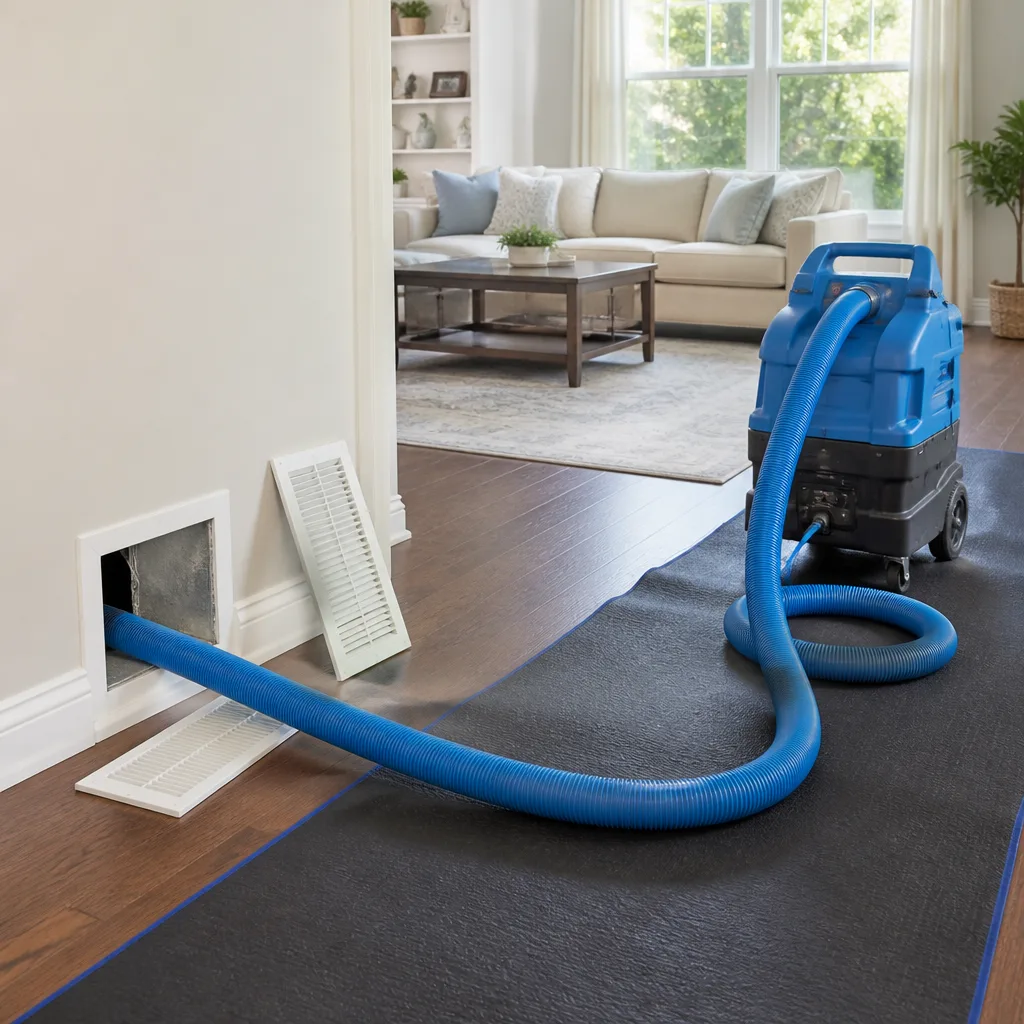 Whole-home duct cleaning
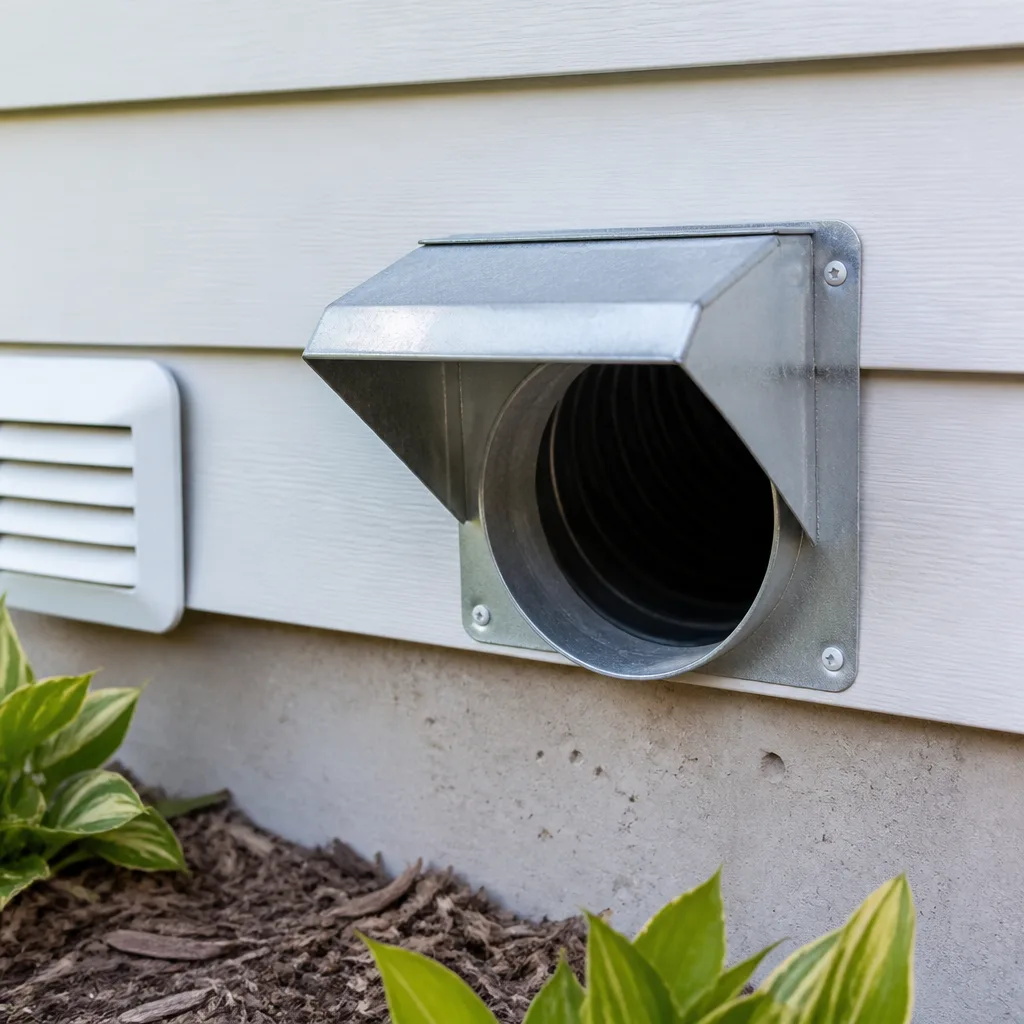 Dryer vent cleaning
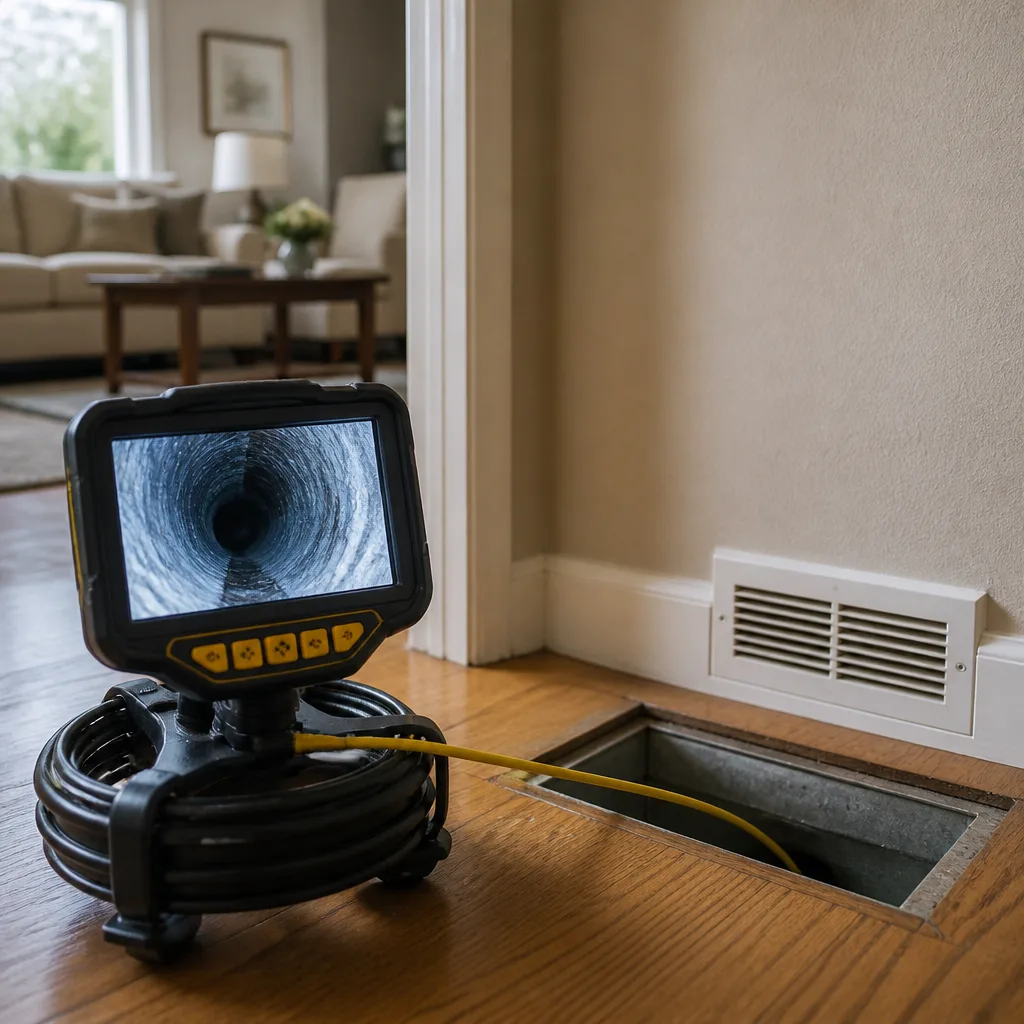 Camera inspection
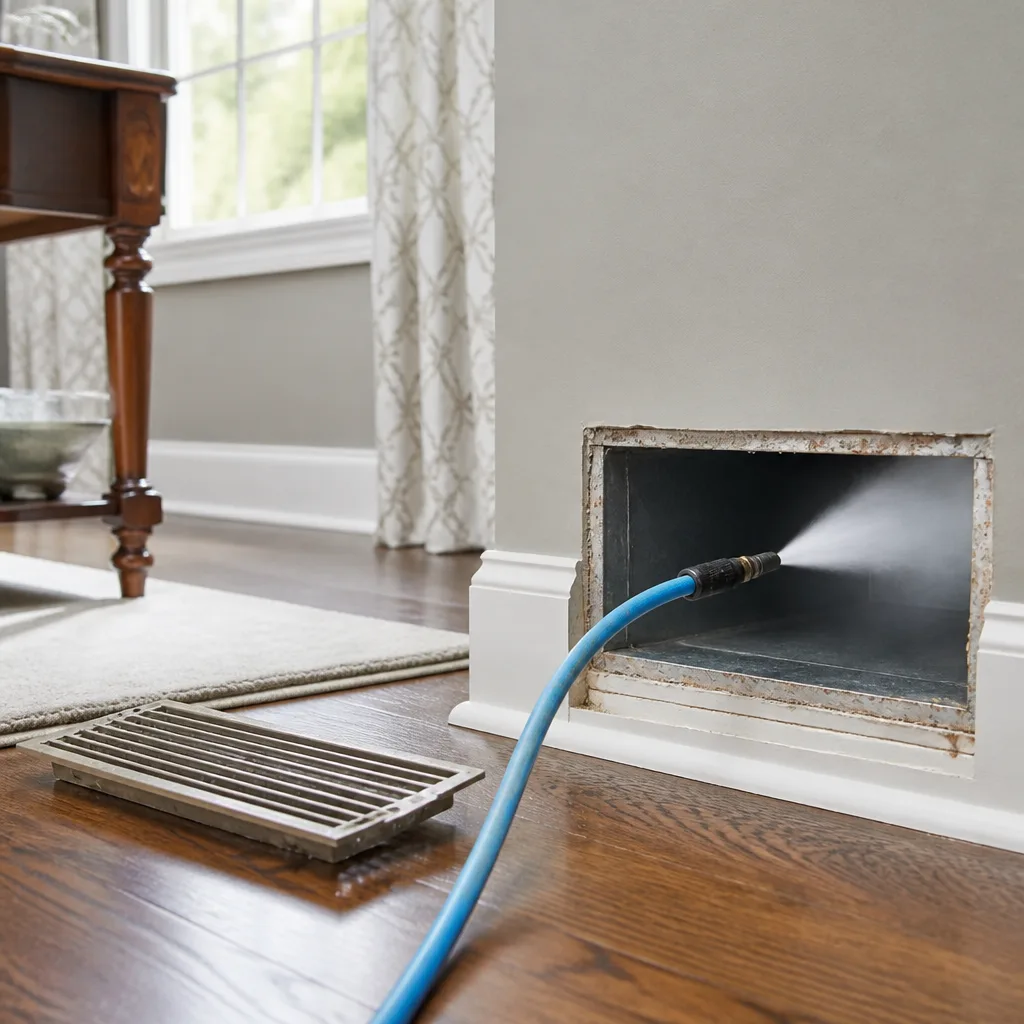 Sanitizing & deodorizing
Whole-system duct and dryer vent check with before-and-after photos - you see exactly what came out of your vents
That "$99 whole-house special" is a bait ad - the real number appears once they are in your hallway, or the "clean" is a shop-vac at the register. We photograph the inside of your ducts before and after instead.
Air Duct Cleaning Warning Signs: A Southeast Raleigh Homeowner’s Reference Guide
Most homeowners read their duct problems wrong. The room that never gets comfortable gets blamed on the HVAC unit. The dust that returns a few days after cleaning gets blamed on the neighborhood. The musty smell that shows up only when the heat kicks on gets blamed on age. In a house in Southeast Raleigh, those symptoms usually point somewhere else entirely: the duct system itself, and specifically the leaks, gaps, and contaminated runs you never see. This guide walks through the specific signals Southeast Raleigh homes produce, how to read them against each other, and when the pattern calls for a professional look rather than another thermostat adjustment.
Quick Answer
The clearest warning signs that a Southeast Raleigh home needs duct attention are a persistent 5-7 degree temperature gap between rooms, dust settling back onto surfaces within days of cleaning, a stale or musty smell that appears only when the system runs, gray-black staining around supply registers, and utility bills climbing while airflow drops. Individually each sign is easy to dismiss. Together they point to a duct system that is leaking, disconnected, or contaminated, and the fastest way to confirm is a full-system inspection with professional-grade equipment.
Styles & brands we work with
- Whole-home duct cleaning
- Dryer vent cleaning
- Camera inspection
- Sanitizing & deodorizing
Table of Contents
- Dirty Ducts vs. Failing Equipment: How to Tell the Difference
- Why Dust Comes Back Within Days (And What It Really Means)
- Odors That Only Appear When the System Runs
- Reading Your Registers: What Discoloration Tells You
- The Utility Bill and Airflow Combination Signal
- What Southeast Raleigh Homes Face That Others Don’t
- Putting the Pattern Together: A Step-by-Step Checklist
- Don’t Overlook the Dryer Vent
Dirty Ducts vs. Failing Equipment: How to Tell the Difference
When a room in your Southeast Raleigh home runs hot in summer and cold in winter, the instinct is to call an HVAC technician. Sometimes that’s right. More often than people expect, the equipment is working exactly as designed and the problem is downstream: a duct run that’s disconnected, crushed, or leaking air into a crawlspace before it reaches the register. The trick is learning which symptoms belong to which system.
Symptoms that usually point to the duct system:
- One or two rooms are consistently off by 5-7 degrees while the rest of the house is comfortable
- The register in the problem room has weak airflow even when the blower is running normally
- Dust settles back onto furniture within days of a deep clean
- A musty or stale smell appears when the system runs and fades when it stops
- Utility bills climb gradually over months without a corresponding change in usage
- Visible staining or dark streaks around supply registers
Symptoms that usually point to the equipment itself:
- No air at all from multiple registers throughout the house
- Loud rattling, banging, or squealing from the air handler
- Ice forming on refrigerant lines or the outdoor unit
- The system short-cycles (runs briefly, shuts off, restarts)
- A sudden spike in bills rather than a gradual drift
The overlap is real, and experienced technicians check both before recommending work. Our technicians have up to 13 years of experience with forced-air systems, and in our experience across Southeast Raleigh, the split is somewhere around two-thirds duct-related when the symptoms are diffuse and mild. A property manager in Southeast Raleigh dealing with a scattering of tenant complaints across a multi-unit building is usually looking at duct issues rather than equipment failure, because equipment failures tend to be localized while duct defects spread through the whole system.
Why Dust Comes Back Within Days (And What It Really Means)
If you’ve ever had ducts cleaned and watched a fresh layer of dust settle back onto your bookshelves within three to five days, you probably wrote it off as “heavy contamination” or “that’s just how it is.” It isn’t. Dust returning that quickly is a specific indicator of duct leakage, not just residual debris.
Here’s the mechanism. A duct system is supposed to operate under slight positive pressure. When the supply side is sealed, air flows out through the registers and into the rooms. When the supply side has leaks, some of that conditioned air escapes into crawlspaces, attics, and wall cavities. In a house with a return-side leak, the system instead pulls unfiltered air in from those spaces. Either way, the result is the same: dust, insulation fibers, and whatever else lives in those cavities get pulled into the airstream and distributed back into your living space.
Cleaning the ducts without addressing the leaks fixes the symptom for a couple of weeks. The dust comes right back. That’s why our approach treats repair and sealing as a core service rather than an upsell. Professional-grade equipment from Rotobrush and Nikro removes contamination completely, and Abatement Technologies negative-air and HEPA filtration tools capture what’s released during the process rather than redistributing it through the house. But cleaning alone can’t fix a system that’s actively pulling dust back in from a crawlspace. Finding and sealing the leak is what stops the cycle.
During an inspection, technicians look for these specific sources of recontamination:
- Disconnected flex duct at joints or plenum connections (common in older homes with limited crawlspace access)
- Unsealed seams, boots, and register connections that leak at the supply side
- Return-air chases that pull from crawlspace or attic rather than conditioned space
- Crushed or kinked flex runs from poor routing under subfloor or through trusses
- Missing or compromised duct insulation that allows condensation and biological growth
In Southeast Raleigh’s older housing stock, especially around neighborhoods with homes from the mid-to-late twentieth century, disconnected flex runs in the crawlspace are the single most common finding. An inspection and a full read of the system is the only way to know for sure.
Odors That Only Appear When the System Runs
Smells are the diagnostic sign homeowners notice first and understand least. The pattern matters more than the smell itself. A musty odor that appears within seconds of the blower kicking on and fades within a few minutes of it stopping is telling you something very specific about where the contamination lives.
Three distinct sources produce three distinct patterns:
- Odor that only appears when the system runs, and only during cooling season: usually a wet drain pan or evaporator coil. The blower pulls air across a moist, contaminated surface and distributes the smell. The ducts are doing their job; the coil or pan is the source.
- Odor that appears when the system runs regardless of season: usually biological growth inside the duct lining, especially at joints and downstream of the coil where moisture accumulates. This is the pattern that points to the ducts themselves.
- Odor that appears only in specific rooms, or only from certain registers: usually localized contamination in a single run, often a run that passes through a humid or damp space (crawlspace, unconditioned wall cavity).
If the smell has a sharp or chemical quality rather than a musty one, that’s a different conversation entirely, and one worth having with a qualified indoor air professional. Air quality and sanitizing services using Honeywell and Aprilaire-compatible solutions can address biological growth in the duct system, but the source has to be identified first. Sanitizing over an active moisture problem just resets the clock.
What we’ve learned working in Southeast Raleigh homes is that the “only when the system runs” pattern is the most reliable single indicator most homeowners can observe without lifting a finger. The system is doing the smell-detection for you: whatever the source, it’s inside the airstream. That’s a duct system problem, almost every time.
Reading Your Registers: What Discoloration Tells You
Before you call anyone, take a flashlight and look at the face of your supply registers. A quick visual inspection across every register in the house gives you a surprising amount of diagnostic information, and 60 seconds is all it takes.
What the discoloration pattern means:
- Light gray dust on the louvers and surrounding wall: normal dust accumulation, likely no duct issue. Clean and monitor.
- Dark gray or black streaks fanning out from the register opening onto the ceiling or wall: this pattern indicates air escaping around the boot or register housing, carrying fine dust particles that settle at the edges. It usually points to a boot-to-drywall gap, not a contamination problem inside the duct.
- Uniform dark staining on the inside face of the register itself: the register is collecting contaminants from the airstream. That’s the duct-side signal, and it points to the run feeding that register.
- Black or dark-green spotting on the register surface, especially in bathrooms or near the kitchen: this pattern is worth flagging for a professional’s eye. It may point to biological growth in a humid run, or it may be nothing. A pro can tell you which.
- Soot-like or yellow-brown residue: usually combustion byproducts, which raises a separate question about venting and should be addressed by the appropriate trade.
Do this inspection room by room, and take photos. Any register showing dark staining is a register worth pointing out during your inspection. During the visit, a technician will pull the register, look into the boot with a camera, and see what’s actually happening inside the run. Professional-grade systems let us see contamination that a flashlight can’t: Rotobrush and Nikro equipment has camera capabilities that show the inside of the duct, which turns “I think it might be dirty” into a documented finding. That’s also why before-and-after photos of your own ducts matter more than any sales pitch.
The Utility Bill and Airflow Combination Signal
Utility bills go up for a dozen reasons. Airflow goes down for a dozen reasons. But when both move together over a period of months, the duct system deserves a look before the equipment gets replaced.
The mechanism is straightforward. A leaking supply duct loses conditioned air into unconditioned space. The system has to run longer to deliver the same comfort to the living space. A leaking return duct pulls in unconditioned air that has to be conditioned. Either way, the equipment runs longer, and bills climb. Reduced airflow at the registers is the visible counterpart: the system is doing more work and delivering less air.
The reason this combination matters for Southeast Raleigh homes specifically is the crawlspace construction common to a lot of the housing stock, especially neighborhoods on the older side of the city. A duct system routed through an unconditioned crawlspace loses a meaningful amount of its air before it ever reaches a register, especially when the summer humidity pushes crawlspace moisture up and the winter pulls cold air back through unsealed joints. You don’t have to guess at the leakage, though. A duct-system inspection identifies it in an afternoon.
Here’s what to watch for the diagnostic pattern:
- Compare bills year-over-year for the same season rather than month-over-month. Seasonal variation muddies the signal.
- Note whether the bill increase moved gradually or stepped up sharply. Gradual increases track with duct leakage; sharp spikes suggest equipment or thermostat issues.
- Test airflow with a simple hand test at each register. Weak flow at two or three registers while the rest feel strong is the classic pattern.
- Check whether the system runs noticeably longer than it used to for the same comfort level. Longer run times with weak airflow is the diagnostic pairing.
If all three point the same direction, that’s your answer. A full air duct cleaning and system inspection, combined with a duct repair and sealing assessment, addresses the airflow issue at its source rather than waiting for the equipment to fail.
What Southeast Raleigh Homes Face That Others Don’t
Southeast Raleigh sits in a region with hot, humid summers and mild winters, and that climate shapes how duct systems age here. Summer dew points in the 70s mean condensation forms on cool duct surfaces whenever the system runs. Where insulation is compromised or joints are unsealed, that moisture feeds biological growth inside the duct lining. The result is the “odor only when the system runs” pattern that appears across so many Southeast Raleigh homes, and it isn’t random. It’s climate-driven.
Winter reverses the pattern. The supply air is warm, the crawlspace is cold, and unsealed duct joints leak warm air into a cool unconditioned space. Surface condensation, moisture accumulation, and further biological growth follow. The full-year cycle keeps duct systems in this region under sustained moisture stress, which is why an older forced-air system in Southeast Raleigh often tests worse than the same-age system in a drier climate.
The housing stock compounds it. Many Southeast Raleigh neighborhoods have homes built in the mid-to-late twentieth century, when duct routing through unconditioned crawlspaces was standard and sealing technology was less developed. That means longer runs of flex duct under subfloor, more joints, and more sealing opportunities for air loss. Renovations also factor in: a homeowner who’s added square footage or reconfigured a room often ends up with a duct extension or reroute that introduces new leakage points.
The practical takeaway for Southeast Raleigh homeowners: don’t compare your duct system to a “normal” baseline from a book or an online guide. Compare it to itself. The pattern of its own performance over time is the best diagnostic signal. And when the pattern points to a problem, an inspection covers all five service lines (cleaning, dryer vents, HVAC, air quality, repair and sealing) in a single visit, which reduces the chance that a problem gets missed because it fell outside one trade’s scope.
Putting the Pattern Together: A Step-by-Step Checklist
Individual warning signs are noise. A cluster of them is a signal. Here’s how to walk through your own home in about 15 minutes and decide whether a full-system inspection is worth scheduling.
- Walk every room at the same time on the same day. Note the temperature in each. A 5-7 degree variance between rooms is the threshold worth flagging.
- Do the flashlight register inspection. Note which registers show dark staining, streaks, or spotting. Photograph them.
- Do the airflow hand test at each register. Note the weak ones. The connection between weak airflow and dark staining is the point.
- Run the system and pay attention to smell. If there’s a musty or stale odor that appears with the system and fades after, that’s a finding. Note whether it appears in cooling season, heating season, or both.
- Dust a horizontal surface in the worst room and check it in five days. Light dust is normal. A visible new layer in under a week, especially on a surface you just cleaned, indicates recontamination from the airstream.
- Pull your last two utility bills for the same season in consecutive years. Note any gradual increase that isn’t explained by rate changes or added appliances.
- Look for any signs of moisture in the crawlspace or around duct boots. Condensation, damp insulation, or water staining near a duct run is a confirmable indicator.
Two or three of these together is a workable threshold for scheduling an inspection. Six or seven isn’t a coincidence. What makes the inspection valuable is the equipment: Rotobrush and Nikro systems let a technician see inside the duct and document what’s there, and Abatement Technologies negative-air and HEPA filtration ensures that what’s captured during the cleaning stays captured. A duct cleaning visit that doesn’t include an inspection of the whole forced-air system is really just a surface cleaning, which is why we handle cleaning, dryer vents, HVAC, air quality, and repair and sealing under one roof.
Don’t Overlook the Dryer Vent
While you’re inspecting the duct system, look at the dryer vent. It’s a separate system, but it’s part of the same forced-air picture, and it’s the one many duct cleaners overlook or outsource entirely. A restricted dryer vent doesn’t just lengthen dry times; it’s a fire risk, and it accumulates lint in a way that’s easy to miss because you never see the inside of the vent run.
Signs the dryer vent needs attention include clothes taking two cycles to dry, a dryer that feels hot to the touch on the cabinet, lint visible around the vent hood outside, and a noticeable increase in drying time over months. A dedicated dryer vent cleaning visit resolves the restriction, and doing it on the same visit as a duct cleaning is far more efficient than booking two separate appointments.
Because our service scope covers forced-air systems end-to-end, a single visit handles the ducts, the dryer vent, and the HVAC components that share the same airstream. A HVAC cleaning component is often what’s needed when the ducts themselves test clean but the system still produces the odor pattern; the coil and drain pan are inside the system, and a whole-system visit catches them. For homeowners in Southeast Raleigh working through the checklist above, the full-system approach is often what closes the loop.
Common Mistakes to Avoid
- Blaming the HVAC unit before inspecting the ducts. Replacing equipment because one room runs hot is an expensive way to solve a problem that a duct repair and sealing visit might have fixed. Rule out the ducts first.
- Cleaning without addressing leaks. A duct cleaning that doesn’t include a leak assessment will leave you with the same dust-returning problem in a couple of weeks. The repair is the durability, not the cleaning.
- Treating a musty smell with air fresheners or standalone filtration. The smell is telling you where the source is. Masking it is not the same as fixing it, and in a humid Southeast Raleigh summer, biological growth in an untreated duct lining will continue.
- Skipping the dryer vent because it isn’t “the ducts.” It’s a separate system, and one that arguably carries more risk. A restricted dryer vent is a genuine fire hazard, and it’s easy to overlook when the focus is on supply registers.
- Accepting a per-vent quote. Duct cleaning priced per register encourages the technician to find a way to add registers. Ask for a flat price per system, agreed before work starts, with before-and-after photos of your own ducts.
- Ignoring airflow loss because “the house has always been like that.” Gradual decline is exactly the pattern duct leakage produces. What feels like the baseline is often the accumulated result of years of small leaks.
- Booking a clean with a provider who won’t show you the camera footage. If a company can’t show you the inside of your ducts before and after the work, you have no way of knowing what was done. Ask up front.
See the difference
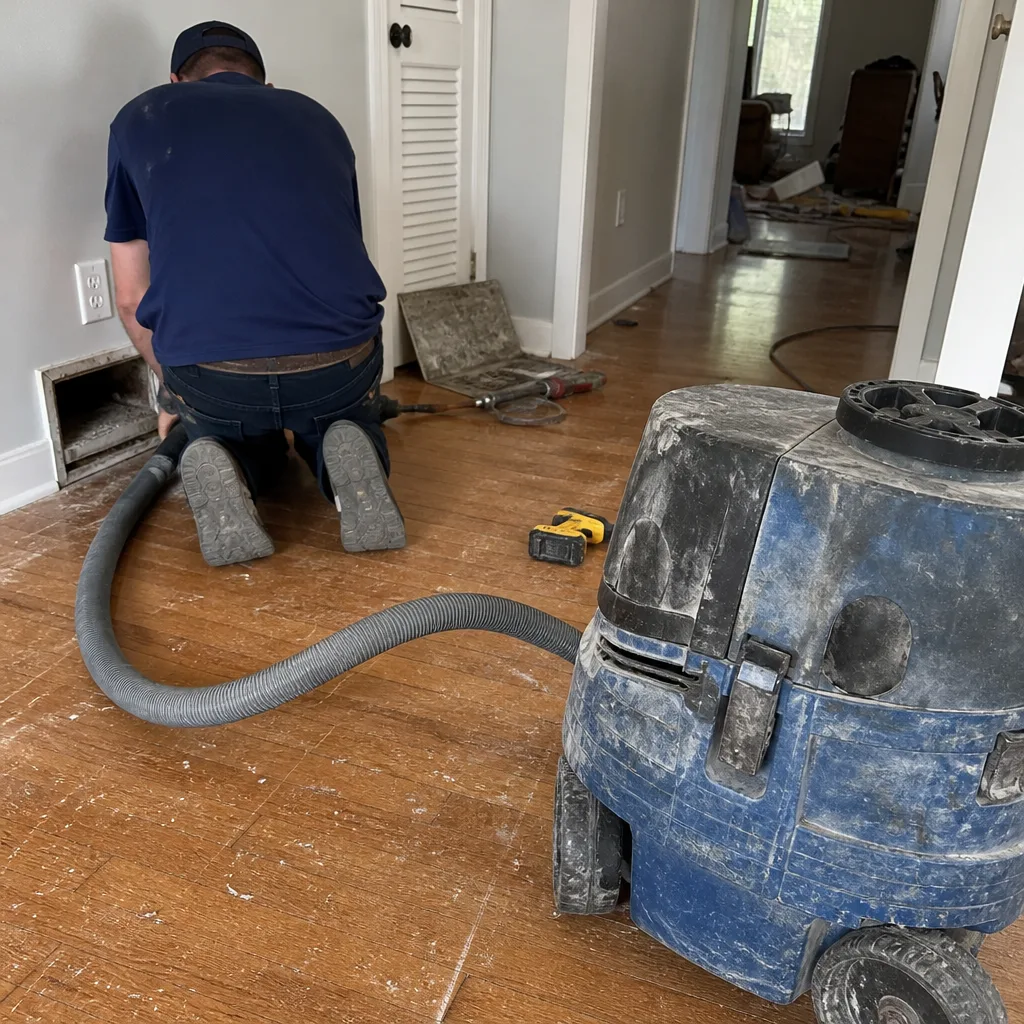 Before
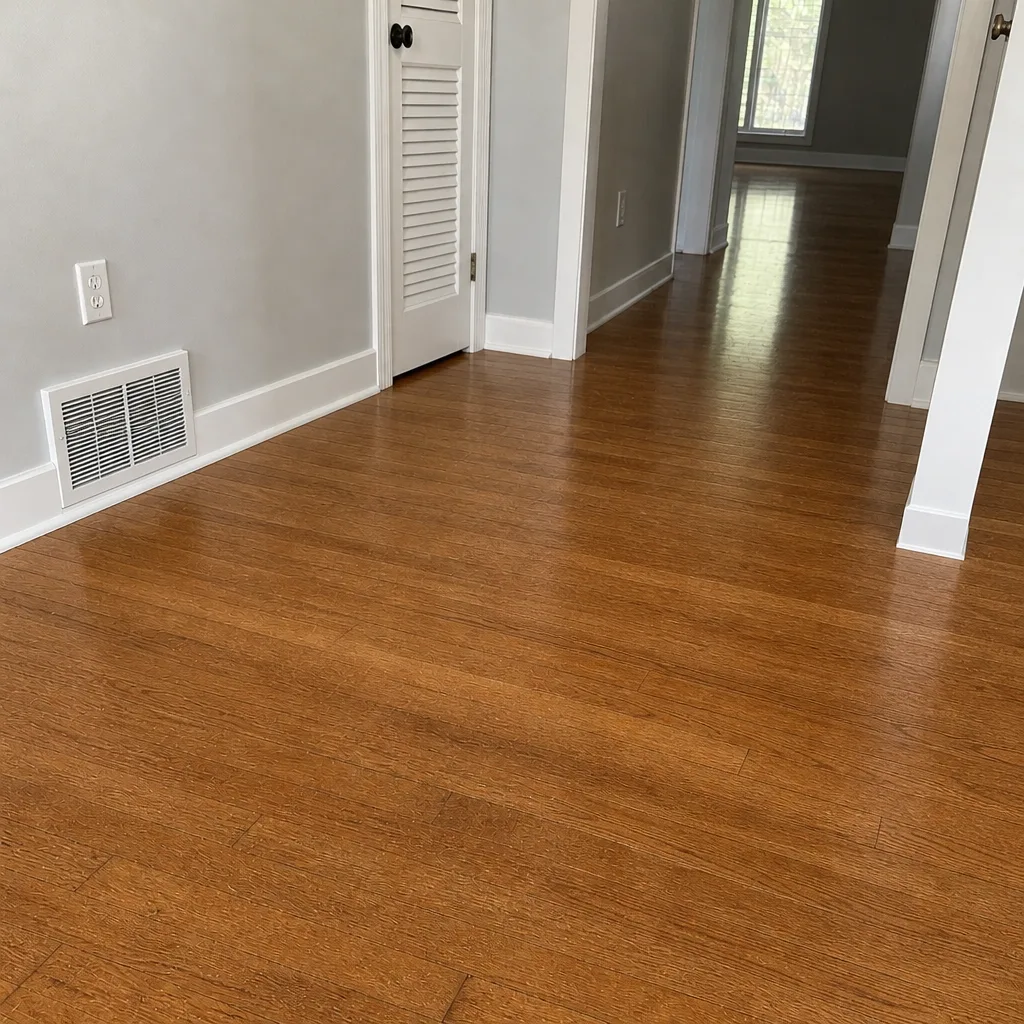 After
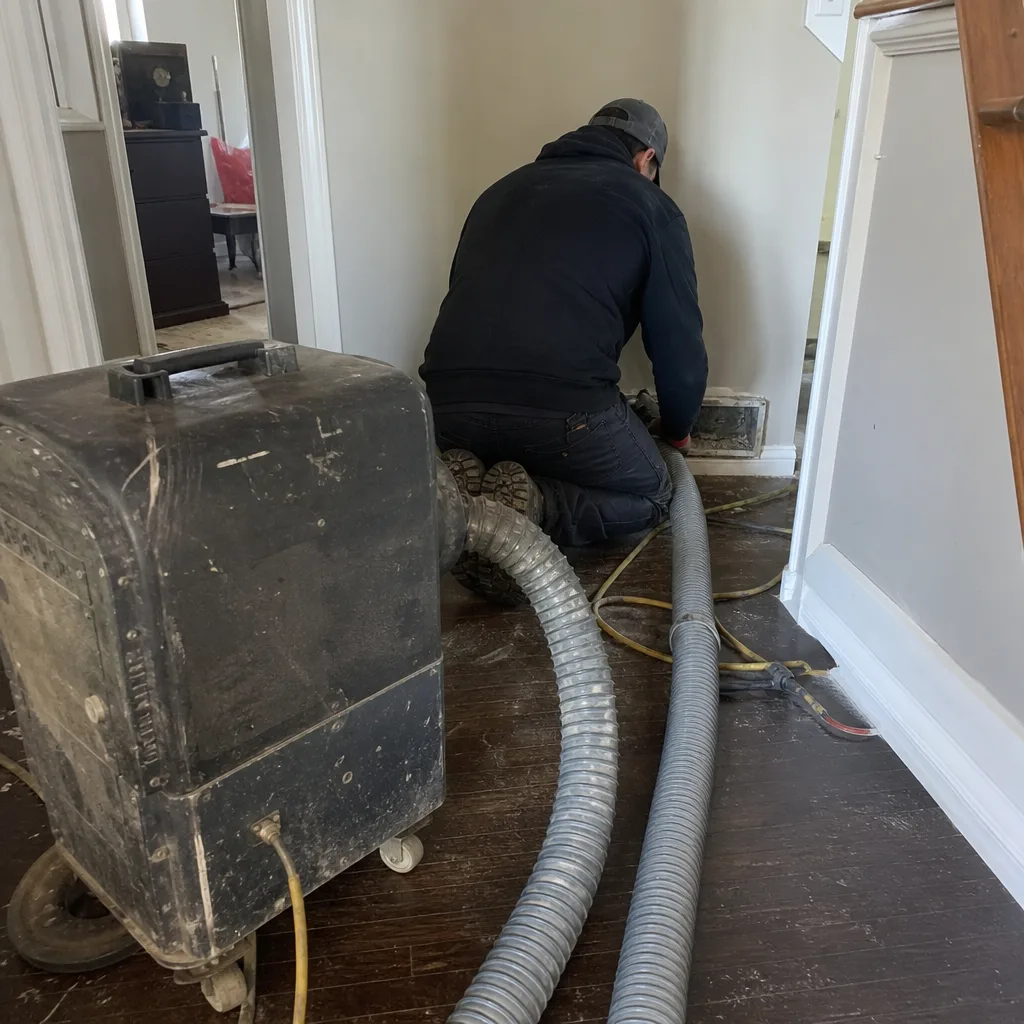 Before
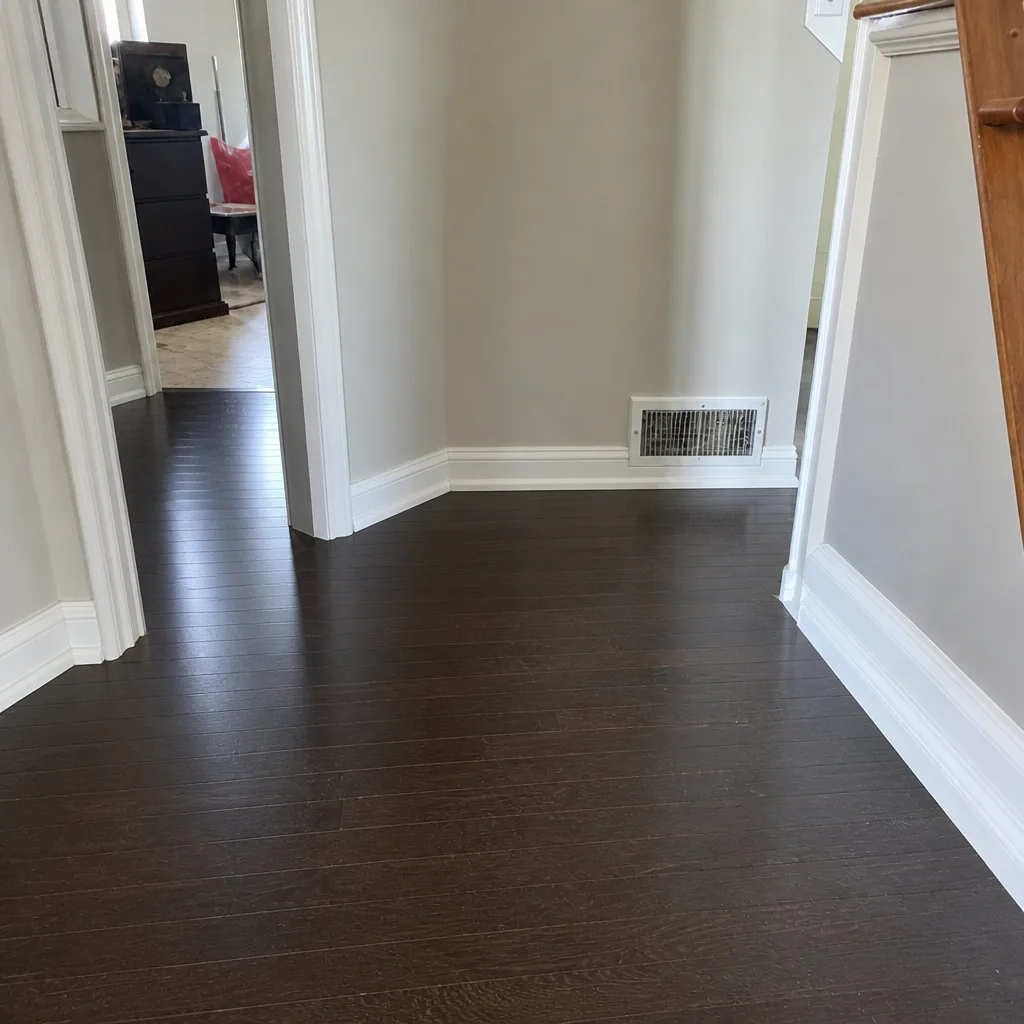 After
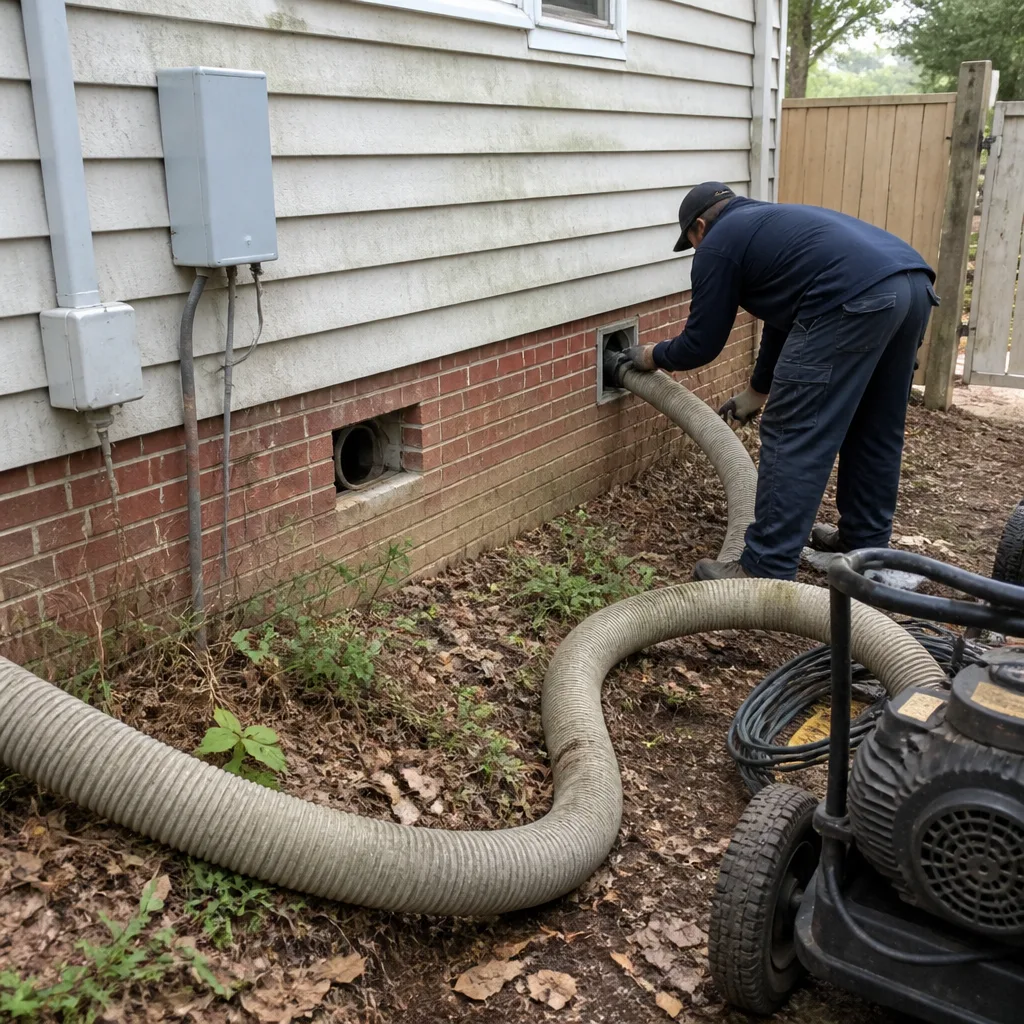 Before
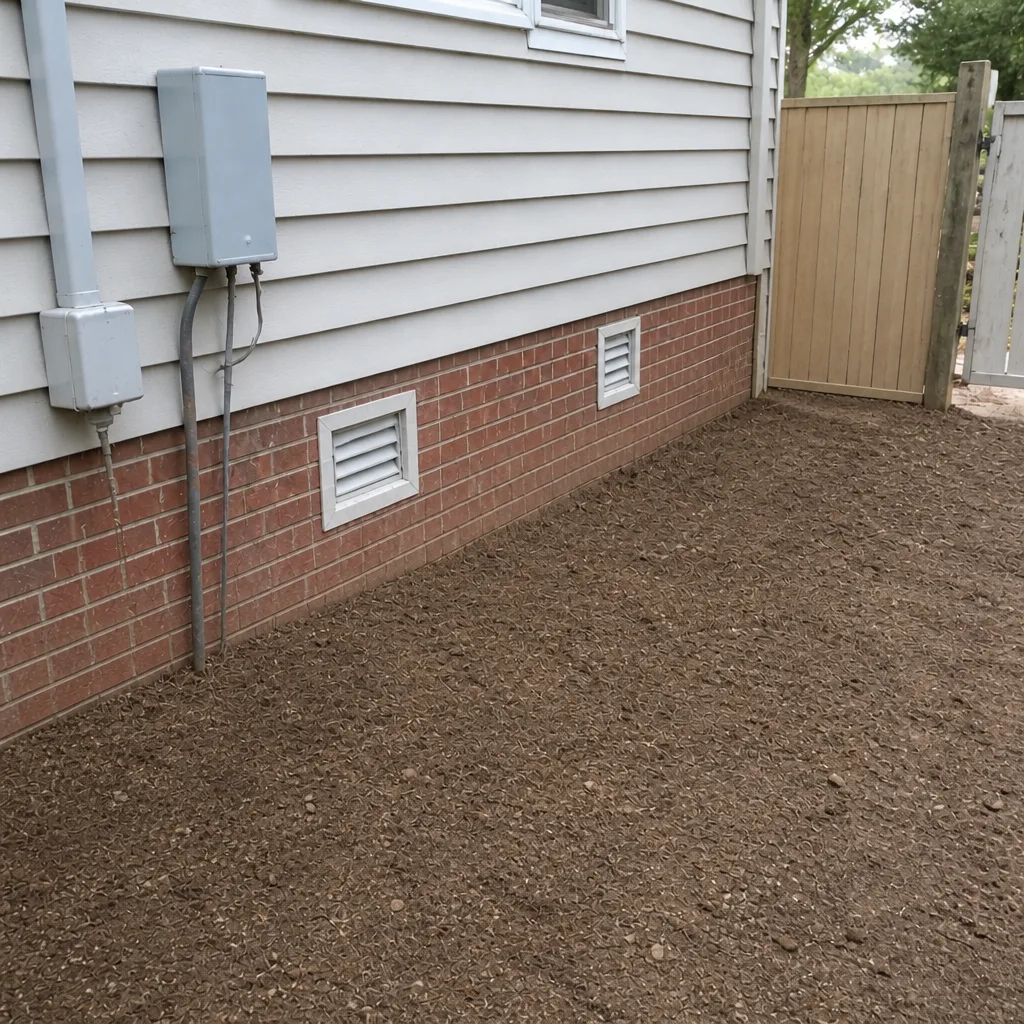 After
When to Call a Professional
Call for a professional inspection if you’ve checked the list above and found three or more signals together, if any single register shows dark staining that’s spreading, if a musty smell appears only when the system runs, or if a room’s temperature gap has widened noticeably over the past year. Also call if you’re moving into a Southeast Raleigh home and don’t have a documented service history; a first-time duct inspection is a reasonable way to establish a baseline, and the same visit can address duct repair, air quality sanitizing, and dryer vent cleaning in a single stop. This isn’t a job for a shop vac. High-efficiency equipment and containment matter, and a trained eye on the camera is what separates a real cleaning from a cosmetic one. Air Duct Cleaning Southeast Raleigh offers free estimates in Southeast Raleigh. Call (866) 937-7160, or reach out through our main air duct cleaning Southeast Raleigh page to schedule a walkthrough of your forced-air system.
Frequently Asked Questions
If the symptoms affect the whole house and are gradual (dust returning within days, a consistent temperature gap, a musty smell that follows the system), the ducts are the likely source. If the symptoms are sudden and localized (no air at all, loud noises, ice forming on lines), the equipment is the likely source. A duct inspection with camera capability confirms which one you’re dealing with before any work is scheduled, and the visit covers both the ducts and the HVAC components in the same trip. Call (866) 937-7160 to schedule a free estimate. We answer 24/7. Fast dispatch from 7am to 7pm, Sunday through Friday.
Honest whole-system pricing is quoted per system rather than per vent, and the exact number depends on your system size, accessibility, and how much repair and sealing work is needed. What matters more than the sticker is the structure of the quote: one flat price per system, agreed before work starts, no per-vent pricing, and before-and-after photos of your own ducts so you know what was done. Call (866) 937-7160 for an exact quote. Estimates are free, and the written estimate is what sets the final price.
Usually because the scope is smaller than you think. A low quote often covers only a surface vacuum of accessible runs, skips the camera inspection, skips leak assessment, and leaves the biological growth in place. That kind of cleaning produces the dust-returning problem in a couple of weeks, which is why the same “symptoms” recur and another visit gets booked. The professional-grade systems from Rotobrush and Nikro, and containment equipment from Abatement Technologies, are part of what a legitimate quote covers. Ask any provider what equipment they’ll use, whether they’ll show you the camera footage, and whether the price is flat per system. Call (866) 937-7160 for a quote and a scope that matches the work.
You should get before-and-after photos of your own duct system, not stock images or a generic report. Camera footage inside the duct before and after the visit is the real documentation, and any provider using professional-grade Rotobrush or Nikro equipment can produce it. If the provider can’t show you the footage, the visit is not verifiable. Call (866) 937-7160 and ask for the before-and-after documentation as part of the estimate.
There’s no single universal interval, and the honest guidance is that it depends on your specific system rather than a calendar. In Southeast Raleigh, the hot humid summers drive condensation on cold duct surfaces, which accelerates biological growth, so homes in this climate tend to benefit from inspection more often than the national baseline suggests. A first-time inspection establishes the baseline for your specific house; from there, the pattern of dust return, odor, and airflow tells you when the next visit is needed. Call (866) 937-7160 if you’re not sure where to start.
It can reduce what’s circulating through the system, but it works best when paired with fixing the source of contamination rather than just cleaning the ducts. A leak pulling crawlspace air into the system will keep reintroducing allergens regardless of how well the ducts were cleaned. That’s why we handle duct repair and sealing as a core service alongside cleaning, and air quality sanitizing with Honeywell and Aprilaire-compatible solutions where biological growth is present. Call (866) 937-7160 to talk through your situation.
Yes, and it’s the piece many duct cleaners overlook. A restricted dryer vent is a fire risk and a common cause of long dry times. Because our service scope is built for the full forced-air system, we handle it on the same visit as the duct cleaning and HVAC work, which is the efficient way to get the whole system addressed at once.
The Bottom Line
The warning signs of a duct problem aren’t dramatic, and that’s exactly why they get missed. A temperature gap here, a returning dust layer there, a smell that appears only when the system runs. Read individually, they’re easy to dismiss. Read together, they form a pattern that points clearly at the duct system rather than the equipment. For Southeast Raleigh homeowners, that pattern matters more than any single symptom, and confirming it takes a few minutes of inspection plus a professional visit that covers cleaning, repair and sealing, HVAC, air quality, and the dryer vent in one stop. If your home is producing three or more of these signals, get the whole system looked at.
If you’ve found a cluster of these signs in your Southeast Raleigh home, call (866) 937-7160 for a free estimate. We answer 24/7. Fast dispatch from 7am to 7pm, Sunday through Friday. The written estimate sets the final price, and before-and-after photos of your own ducts come with the work.
Written by the team at Air Duct Cleaning Southeast Raleigh.