
Last updated November 23, 2026
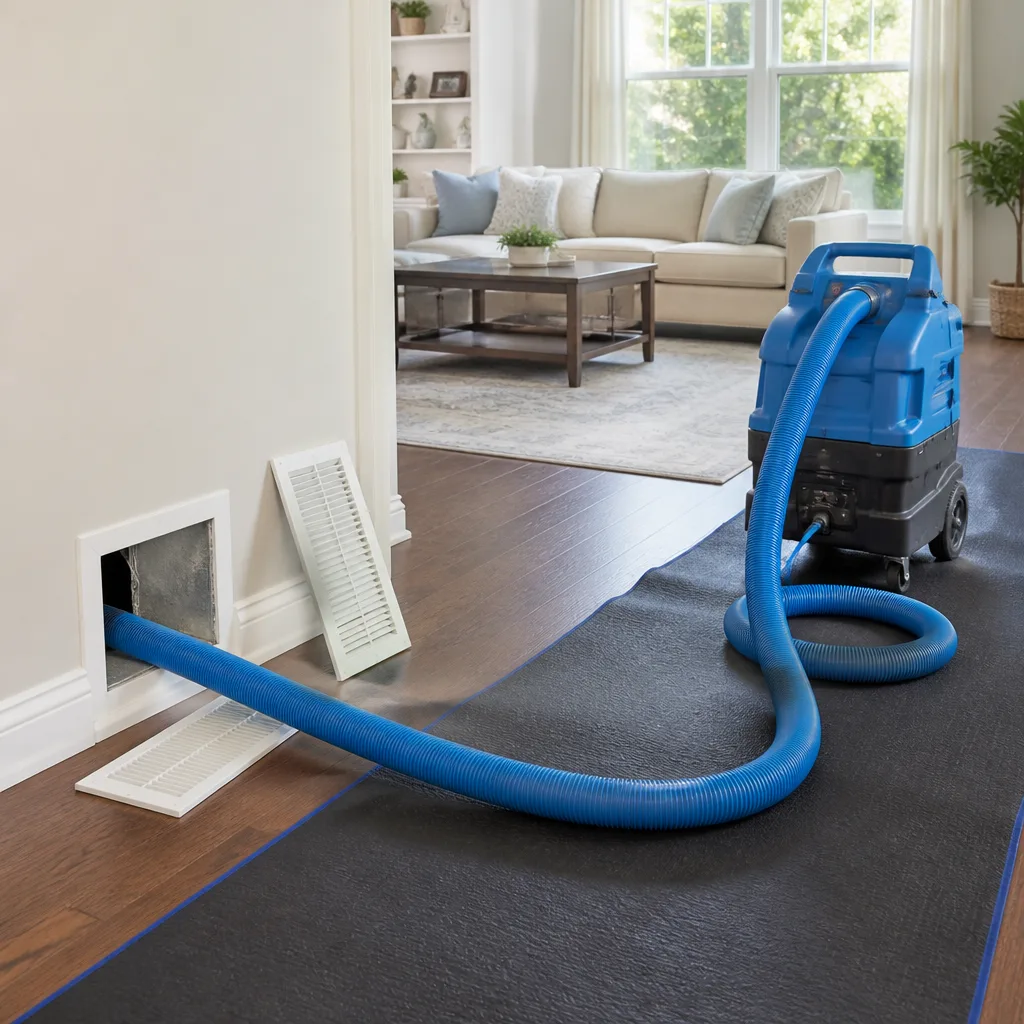 Whole-home duct cleaning
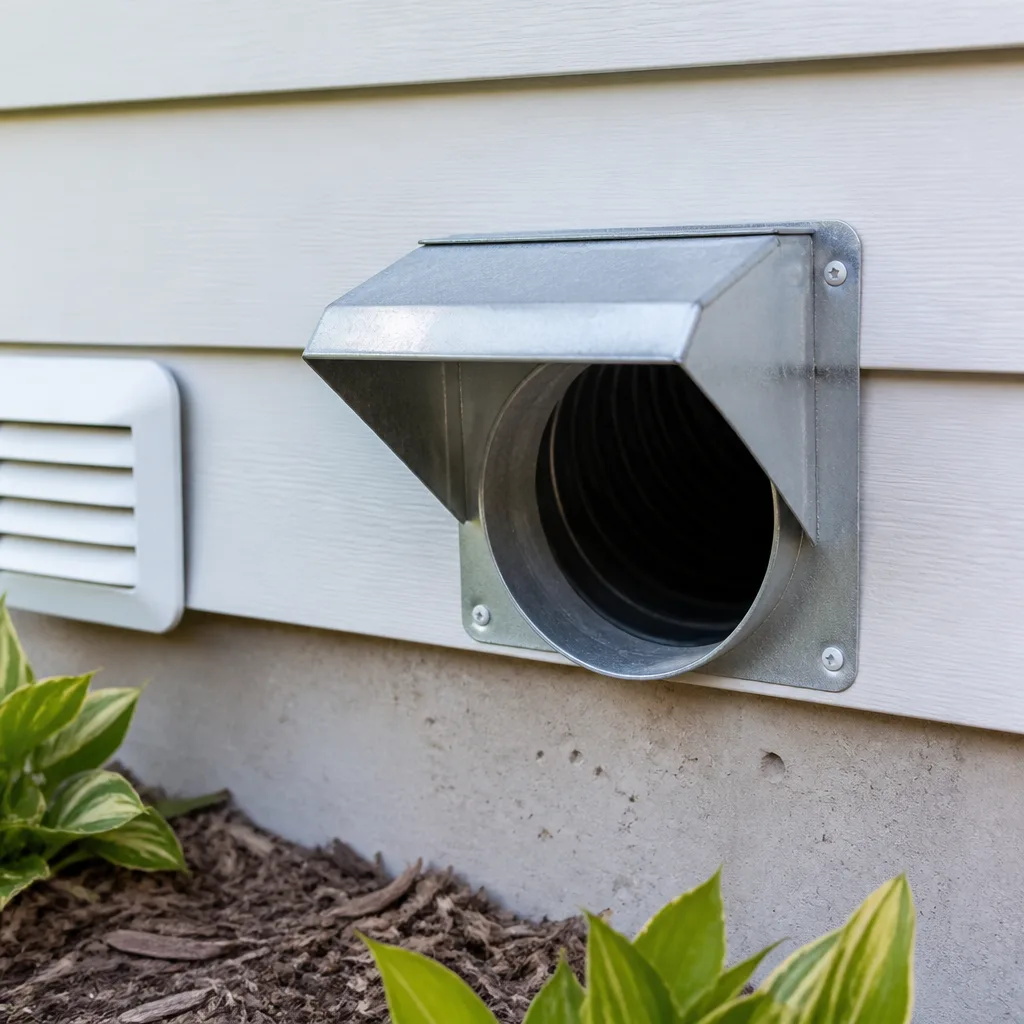 Dryer vent cleaning
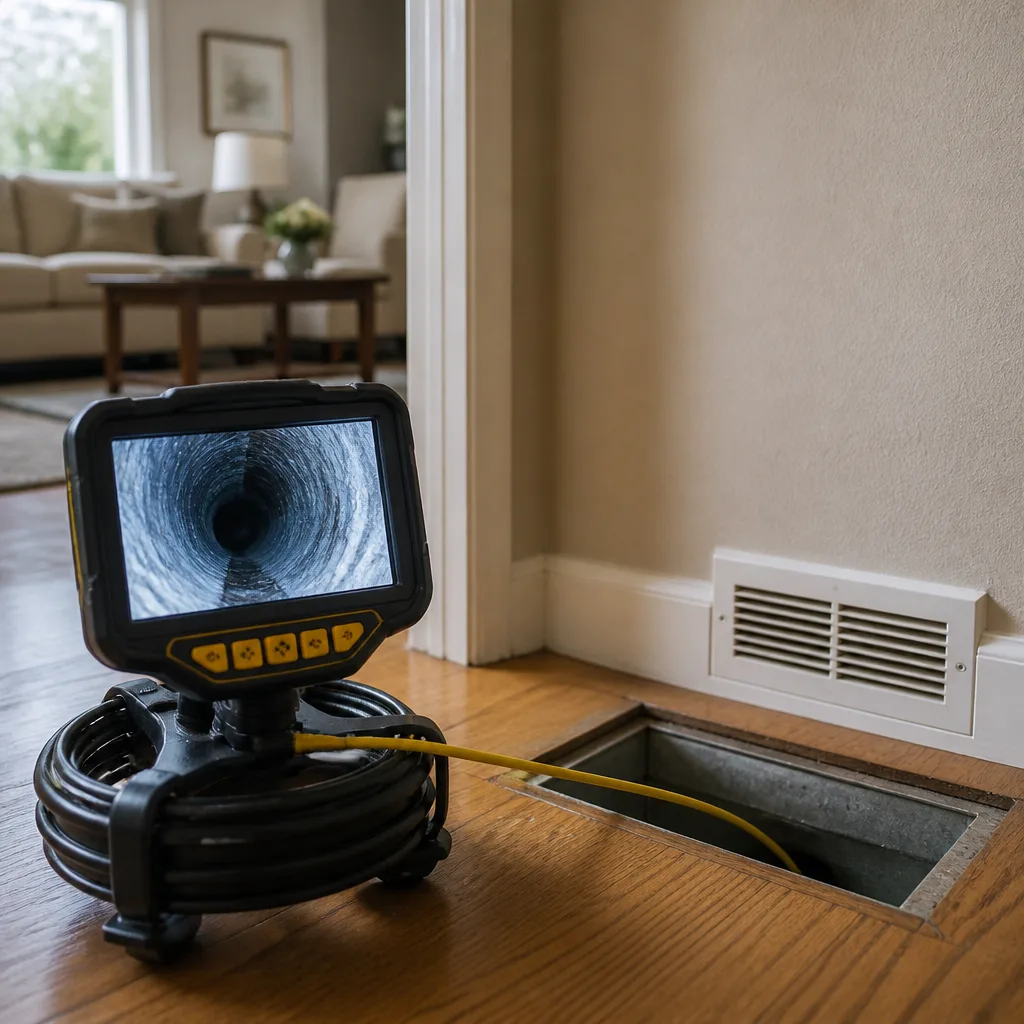 Camera inspection
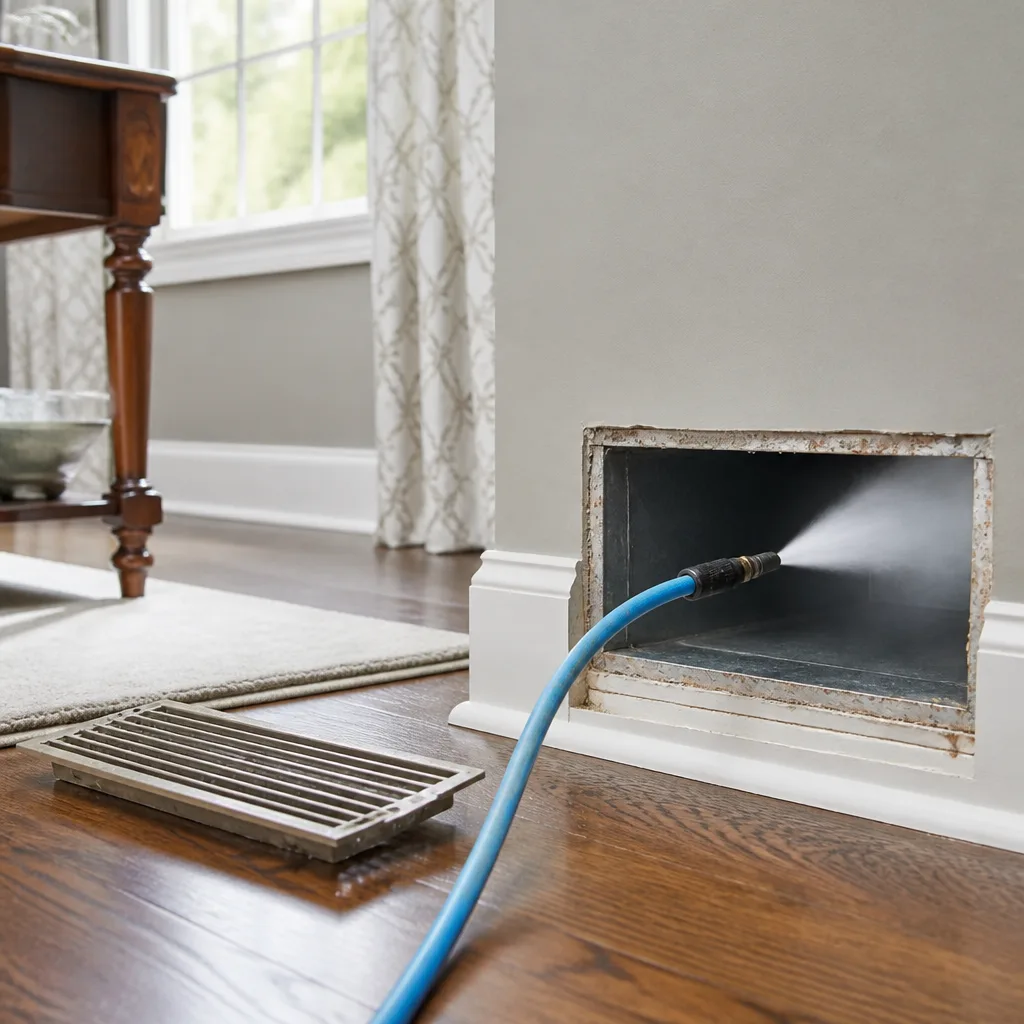 Sanitizing & deodorizing
Whole-system duct and dryer vent check with before-and-after photos - you see exactly what came out of your vents
That "$99 whole-house special" is a bait ad - the real number appears once they are in your hallway, or the "clean" is a shop-vac at the register. We photograph the inside of your ducts before and after instead.
How to Hire an Air Duct Cleaning Contractor in Southeast Raleigh: A Step-by-Step Guide
In North Carolina, anyone with a vacuum and a van can legally market themselves as an air duct cleaning company. There is no state-issued license specifically for this trade, which means the hiring decision rests on your ability to ask the right questions before you write a check. Star ratings won’t tell you whether the crew uses professional-grade equipment or a shop vac with a longer hose. This guide gives Southeast Raleigh homeowners a practical vetting framework built on three things that actually predict a good outcome: equipment, process, and documentation. By the end, you’ll know exactly what to ask, what to verify, and what a legitimate scope of work looks like.
Quick Answer
To hire an air duct cleaning contractor in Southeast Raleigh, verify three things before booking: the equipment they use (professional systems like Rotobrush or Nikro, not consumer vacuums), whether they follow NADCA ACR assessment and cleaning standards, and whether they provide documentation with before-and-after photos of your own system. Ask for proof of general liability insurance, confirm the technicians are employees rather than day labor, and insist on a written scope of work with line items before anyone touches your ducts.
Styles & brands we work with
- Whole-home duct cleaning
- Dryer vent cleaning
- Camera inspection
- Sanitizing & deodorizing
Table of Contents
- Why There’s No License for This Trade in North Carolina
- The Five Questions to Ask Before You Schedule
- Red Flags: What a Low-Bid Duct Cleaning Offer Really Means
- What to Verify Beyond Online Reviews
- How to Read a Scope of Work Estimate
- Why You Should Expect a Post-Cleaning Report
- Equipment: What Professional-Grade Actually Means
- Why the Full System Matters in Southeast Raleigh Homes
Why There’s No License for This Trade in North Carolina
North Carolina does not issue a license specifically for air duct cleaning. General contractor licensing exists, but duct cleaning falls outside it. That’s not a technicality you can wave away. It means the barrier to entry is a vacuum and a business card. In a market like Southeast Raleigh, where older ranch homes and 1990s subdivisions both have decades of dust accumulated in flexible duct runs, plenty of operators show up with consumer equipment and a flat rate.
What fills the gap is voluntary certification. The National Air Duct Cleaners Association (NADCA) publishes the ACR standard, which is the Assessment, Cleaning, and Restoration standard the industry uses to define what a legitimate cleaning job includes. NADCA membership and ACR adherence are not required by law. They’re the closest thing to a credential that exists in this trade, and a contractor who takes the work seriously will know what you mean when you ask.
Here’s what that means for you as a homeowner or property manager in Southeast Raleigh: the vetting is entirely on your side of the table. Nobody is going to inspect the work on your behalf. The questions in this guide are designed to do that job for you, in the fifteen minutes before you schedule.
The Five Questions to Ask Before You Schedule
These five questions separate a professional operation from a van with a coupon. Ask them on the phone. A contractor who does this work every day will answer without hesitation.
- What equipment do you use? The answer should include brand names: Rotobrush, Nikro, or comparable professional systems. If the answer is vague or involves “a big vacuum,” that’s your signal. Professional duct cleaning uses negative-pressure containment and rotary agitation, not suction alone.
- Do you follow NADCA ACR standards? A yes is good. A yes with an explanation of what that involves (source removal, containment, mechanical agitation) is better. A blank stare tells you they’ve never heard of the standard.
- Do you do a pre-inspection? A real contractor inspects your system before quoting. Camera inspection, airflow assessment, and a look at the accessible duct runs should happen before anyone gives you a firm price.
- Will I get before-and-after photos? The answer should be an immediate yes. Ask to see a sample report if you can. If documentation sounds like an extra, it’s not a professional job.
- Are your technicians employees or subcontractors? W-2 employees trained on the equipment are a different proposition than day labor hired per job. Ask directly.
If you’re still early in the process and want to understand what the work itself involves, start with Air Duct Cleaning Southeast Raleigh to see the full scope of what a complete job should cover. Then come back to these questions with a clearer picture.
Red Flags: What a Low-Bid Duct Cleaning Offer Really Means
A $99 whole-house duct cleaning offer is not a cleaning. It’s an inspection with a sales pitch attached. The economics don’t work otherwise: professional equipment, containment setup, and a crew’s time for an entire forced-air system can’t be delivered for that number. What happens instead is the technician arrives, runs a vacuum briefly, then points to “mold” or “debris” and quotes the real job at several times the advertised rate.
Watch for these specific signs of a bait-and-switch operation:
- No pre-inspection before quoting. A price given over the phone without looking at your system is a number designed to get a foot in the door, not an estimate.
- No before-and-after documentation offered. If photos aren’t part of the standard job, you have no way to verify anything was done.
- Pressure to decide on the spot. Legitimate work doesn’t require a same-visit upgrade pitch under time pressure.
- Per-vent pricing. Quoting by the vent rewards speed, not thoroughness. A whole-system price agreed before work starts is the honest structure.
- No proof of insurance. A contractor who can’t produce a certificate of general liability insurance is passing the risk to you.
The bait-and-switch reputation this industry carries is earned by operators who run exactly this playbook. The defense is asking for a written, itemized scope before anyone arrives, and getting one flat price per system agreed in advance.
What to Verify Beyond Online Reviews
Online reviews tell you whether the truck showed up on time. They don’t tell you whether the crew used containment or opened a window. In a trade with no licensing requirement, reviews are among the weakest signals available. Here’s what to check instead.
- General liability insurance. Ask for a certificate of insurance. This covers your home if something is damaged during the job. A contractor who can’t provide it is a contractor who expects you to absorb that risk.
- NADCA membership. It’s voluntary, which is exactly why it means something. Membership signals the contractor has committed to the industry’s published standard.
- Employee status. Ask whether technicians are W-2 employees or independent subcontractors hired per job. Training and accountability differ significantly between the two.
- Equipment proof. Ask for photos or a description of the equipment. Brands like Rotobrush and Nikro are industry-recognized systems; a named brand is verifiable, a generic answer is not.
- Report samples. Ask to see what a completed job report looks like. A professional operation will have one ready to share.
One more verification step specific to your system: ask whether the contractor cleans the blower, evaporator coil, and return plenum or only the duct runs. A quote that only covers accessible branch lines is missing most of the system. That matters more in Southeast Raleigh than in newer builds, because older housing stock here often has flexible duct runs that have settled and accumulated debris for years without ever being touched.
How to Read a Scope of Work Estimate
A legitimate scope of work for full-system cleaning has recognizable line items. If your estimate is a single dollar figure with no breakdown, ask for a written scope. Here’s what should appear.
- Source removal of debris using mechanical agitation and negative pressure, not just vacuuming the accessible surfaces.
- Cleaning of the supply and return duct runs throughout the entire system, with a note on how many runs are included and how difficult runs are handled.
- Cleaning of the air handler components: blower assembly, evaporator coil, and drain pan.
- Return plenum and grille cleaning, including registers and diffusers.
- Containment method: how negative pressure is maintained during cleaning and what filtration equipment is used to capture contaminants.
- Post-cleaning documentation: photos and a written summary of findings.
- Any repair or sealing items identified during inspection, priced separately with your approval.
If you’re comparing quotes and one of them doesn’t list these line items, the lower number is hiding work it doesn’t plan to do. For reference on what each service line covers, air duct cleaning is the base job every system needs, and add-on work should be priced on top of that, not folded into a mystery figure.
When the estimate includes dryer vent work, that’s a sign the contractor is looking at the whole system. dryer vent cleaning is a fire-risk reduction step that many duct cleaners don’t offer or outsource, and it’s worth confirming it’s handled by the same crew on the same visit.
Why You Should Expect a Post-Cleaning Report
Getting a report with before-and-after photos is not an unusual request. It’s the standard for professional work in just about every service trade that touches your property. If a duct cleaning contractor treats documentation as a special favor, that’s about their process, not your expectations.
A useful report includes:
- Photos of the duct interior before and after cleaning, from the same locations.
- A summary of what was found during inspection, including any damaged or disconnected sections.
- Notes on any components that could not be accessed and why.
- Recommendations for repair, sealing, or air quality treatment if applicable, with the reason behind each.
Compare the photos against the scope of work. Did the contractor clean what they said they’d clean? Is the air handler visible in the report? A report that only shows one or two duct runs is a report that leaves most of the question unanswered. Our technicians have up to 13 years of experience, and we’ve learned that the report is often what determines whether a homeowner trusts the contractor enough to call them again.
Equipment: What Professional-Grade Actually Means
Equipment is the first question for a reason. It’s the strongest predictor of what happens in your home. Consumer-grade shop vacuums and low-powered portable units can stir up debris without capturing it, pushing particles back into the living space. A professional cleaning job traps contaminants and keeps them contained until they leave your house.
Professional systems like Rotobrush and Nikro use negative pressure with rotary agitation: the flexible shaft whip breaks debris loose from duct surfaces, and the vacuum pulls it into a contained HEPA-filtered collection unit. That combination is what separates a cleaning from a surface wipe. Pair that with Abatement Technologies negative-air and HEPA filtration equipment, the same class of equipment used in remediation work, and the contaminants are captured at the source rather than redistributed through your home.
Air duct cleaning in Southeast Raleigh often involves flexible duct runs that have been collecting dust and construction debris for years. Older housing stock here, including the long-established neighborhoods around Kingwood Drive and the areas near Old Poole Road, means ductwork that predates modern duct-sealing practice. A contractor with the right equipment will handle those runs without tearing or compressing them in the process.
After the cleaning is done, the question shifts from “what’s in your ducts” to “what’s in your air.” Honeywell and Aprilaire-compatible sanitizing treatments integrate with equipment already in most homes, and Guardsman-backed solutions extend the work to indoor air quality rather than just duct appearance.
Why the Full System Matters in Southeast Raleigh Homes
A duct cleaning that stops at the visible runs is a partial job. Your forced-air system is a loop: return registers pull air in, the blower and coil condition it, and supply runs push it back out. Cleaning one part while leaving the rest untouched means debris from the uncleaned section migrates into the clean section within weeks. That’s why a one-visit, full-system approach matters.
Five service lines belong together: duct cleaning, HVAC cleaning, dryer vent clearing, air quality and sanitizing treatments, and duct repair and sealing. Grouping them means a single visit addresses the whole system, and repairs identified during cleaning get fixed the same day instead of becoming a second appointment.
Repair and sealing are the line item most often skipped. Disconnected flex runs, failed mastic at joints, and unsealed plenum connections are the root cause of air loss and contamination. Cleaning without sealing is treating the symptom. In Southeast Raleigh, where a lot of housing stock sits in the 1970s to 1990s range, those joints are usually past the point of being airtight, and sealing them makes the cleaning hold much longer. A contractor who offers cleaning and sealing under one roof is doing the work in the order it should be done.
Common Mistakes to Avoid
- Booking the $99 special. A whole-house cleaning at that price is a lead-generation number, not a service. It turns into an inflated on-site quote once the technician has your signature.
- Skipping the pre-inspection. If a contractor quotes from a website form without looking at your system, the price is a guess designed to get in the door.
- Accepting a quote with no scope of work. A single figure with no line items hides which parts of your system aren’t being cleaned.
- Not asking about equipment brands. “Professional equipment” in a brochure means nothing. Named systems like Rotobrush or Nikro are verifiable.
- Overlooking the dryer vent. A contractor who only cleans HVAC ductwork is leaving a lint accumulation fire risk in place. Ask whether the same crew handles it.
- Not asking for the report upfront. A contractor who offers before-and-after photos without being asked is a contractor with a real process. One who thinks it’s unusual has been doing quick work for a while.
- Skipping the sealing phase. Cleaning without addressing disconnected or unsealed duct sections means the problem returns within months.
See the difference
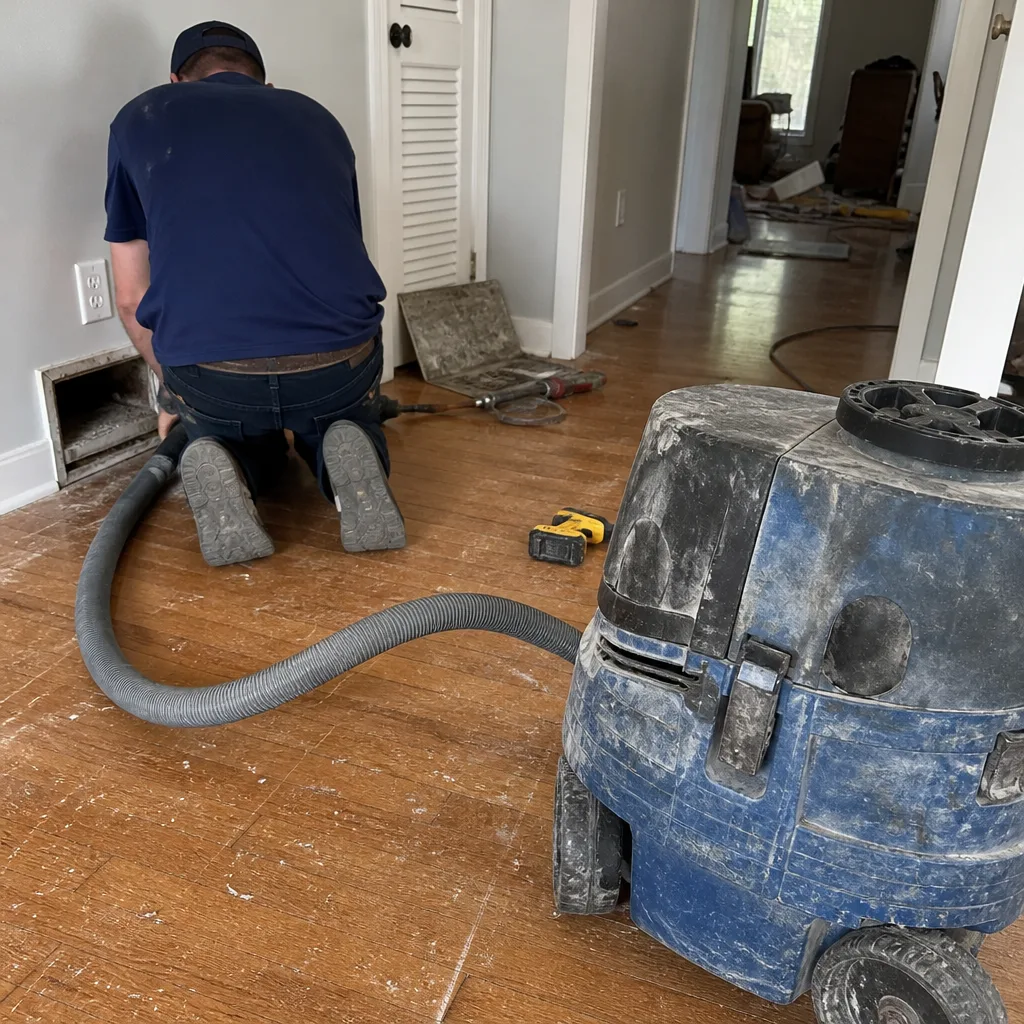 Before
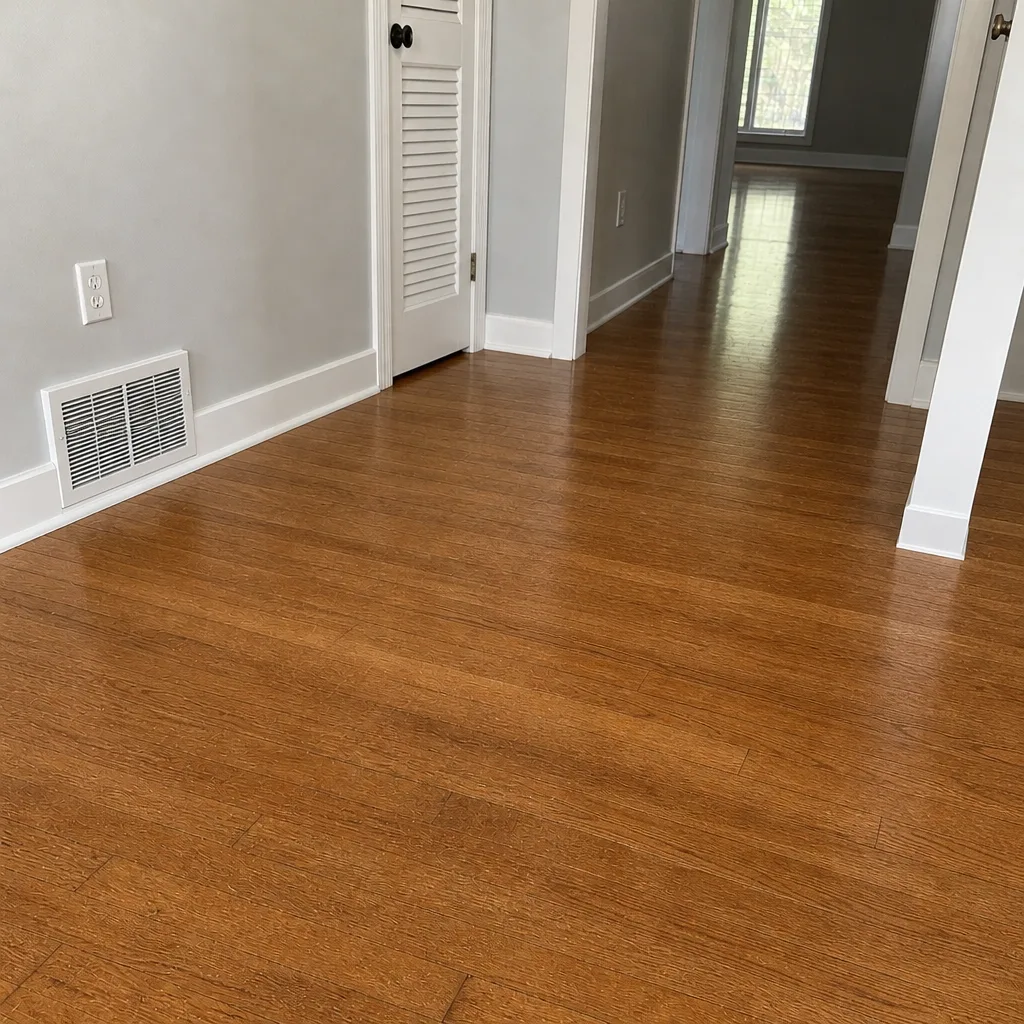 After
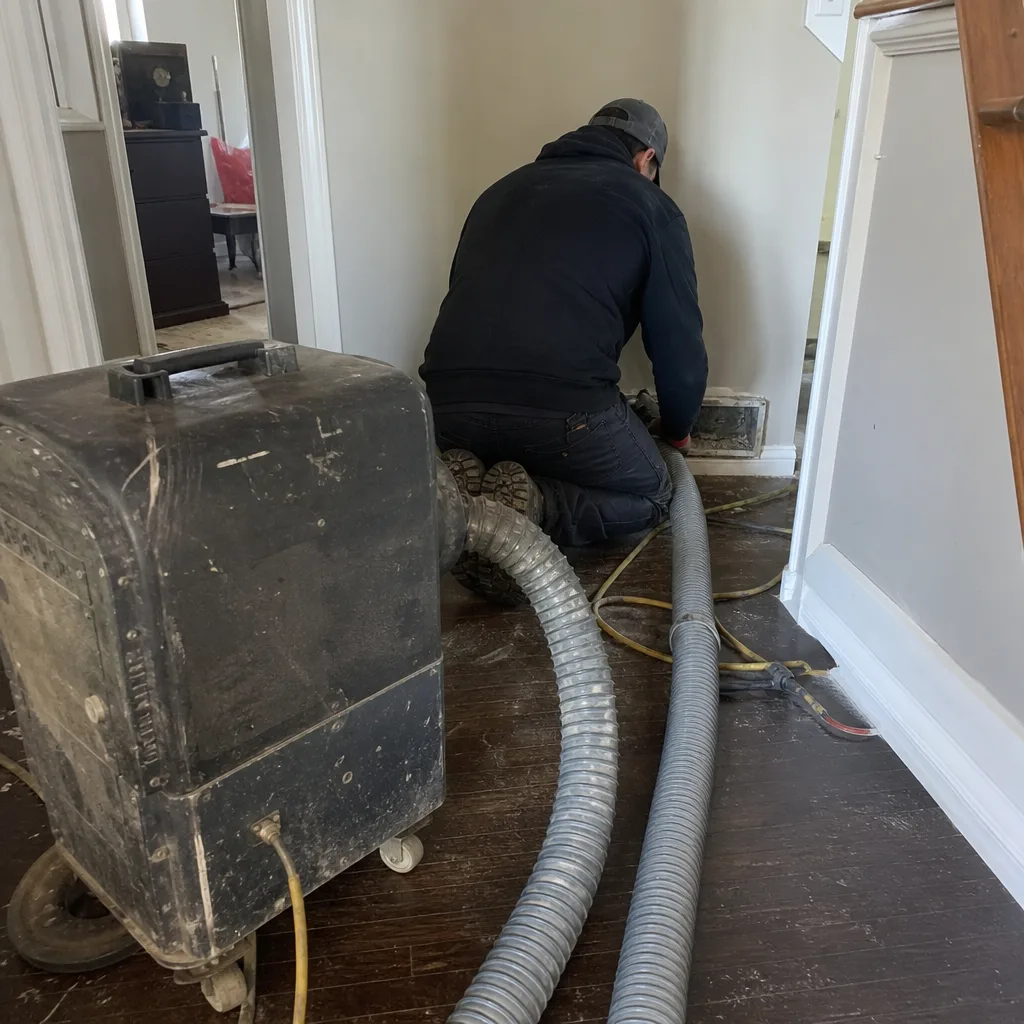 Before
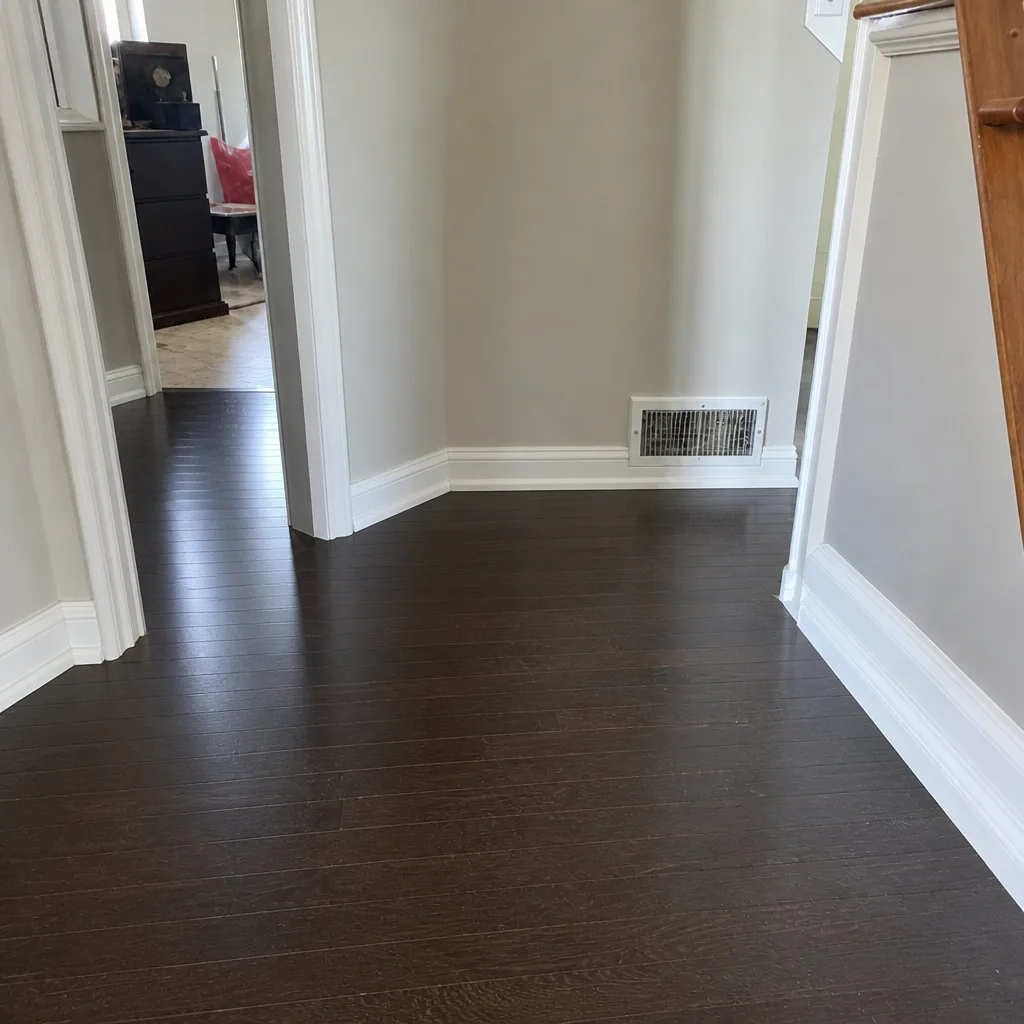 After
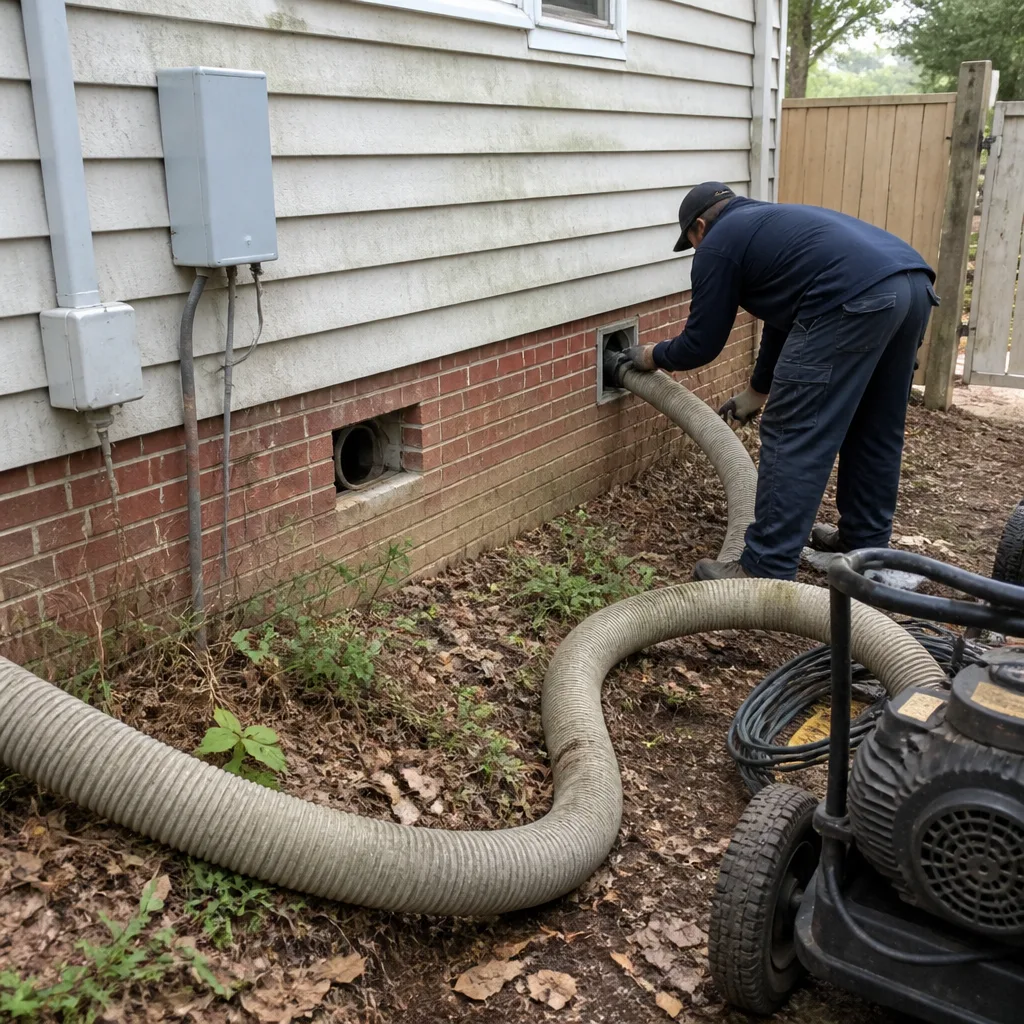 Before
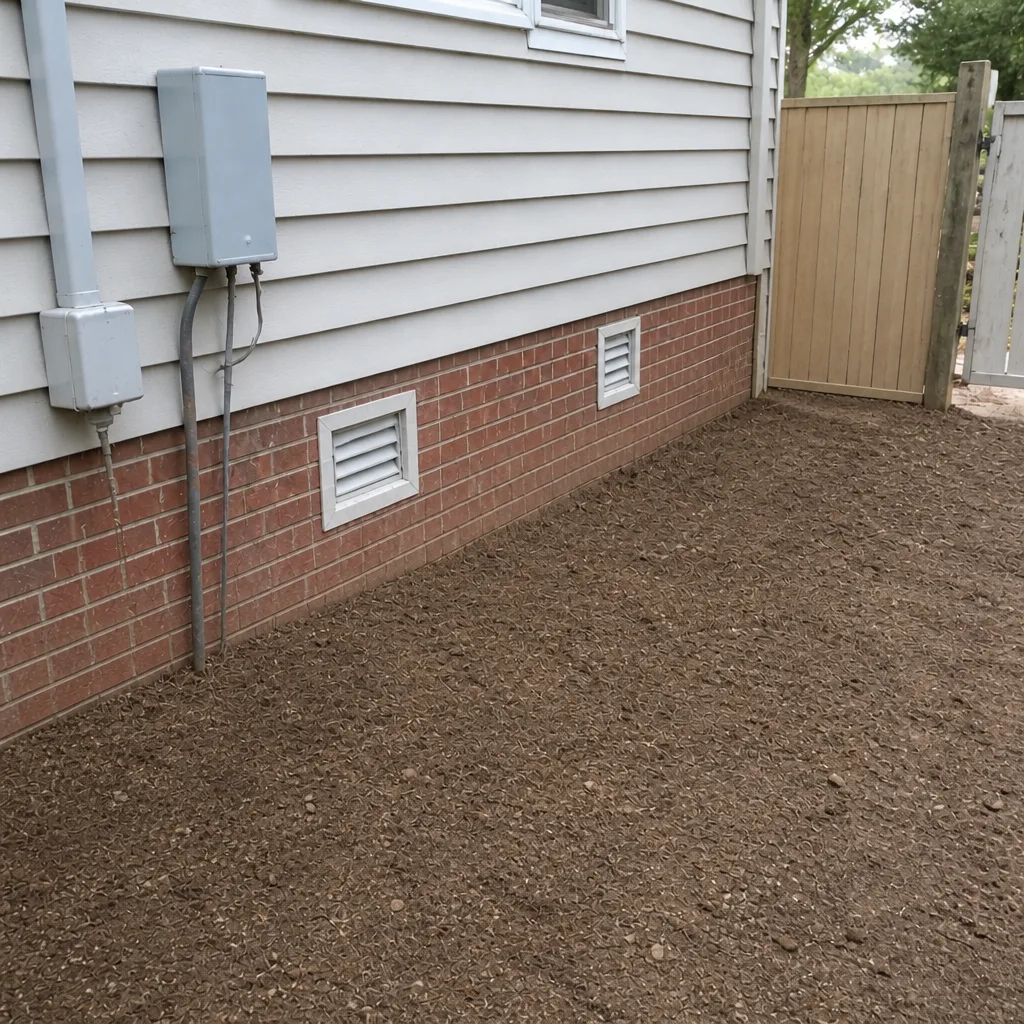 After
When to Call a Professional
Certain conditions make professional cleaning the answer rather than a vacuum and a weekend. Visible debris or dust blowing from supply registers after the system runs is the clearest sign. Recent renovation or remodeling work fills ductwork with drywall dust and wood debris that a filter won’t capture. Anyone in the home with allergies, asthma, or respiratory sensitivity is a good reason to get the system assessed. A new-to-you home, especially one built before the 1990s, is worth an initial inspection because you have no idea what the previous owners left in the ducts. And any dryer that takes longer than one cycle to dry a load warrants a vent inspection.
Air Duct Cleaning Southeast Raleigh offers free estimates in Southeast Raleigh. Call (866) 937-7160. We answer 24/7. Fast dispatch from 7am to 7pm, Sunday through Friday.
Frequently Asked Questions
Air duct cleaning in Southeast Raleigh typically runs $350 to $700 for a standard residential system, and prices depend on the number of runs, system size, and whether repairs or sealing are needed. The quote should be a flat price per system agreed before work starts, not a per-vent figure. Call (866) 937-7160 for an exact quote; estimates are free.
Because they’re not quoting the same job. A $99 offer usually covers a brief surface vacuum with no containment, no air handler cleaning, and no documentation, then converts to a much larger on-site quote once the technician arrives. The lower the opening number, the more important it is to ask for the written scope of work. Call (866) 937-7160 to compare a real estimate.
Before-and-after photos from the same duct locations, plus a written summary of what was found and what was cleaned. Any professional duct cleaning contractor should provide this without being asked. If the report only shows one or two runs, ask about the rest of the system. Call (866) 937-7160 to schedule a free estimate.
Most homes don’t need it on a fixed calendar. Every three to five years is a reasonable baseline for a typical household, but recent renovation, pets, allergies, or a system that’s never been cleaned all justify a sooner inspection. A contractor who quotes a mandatory annual schedule before looking at your system is selling, not assessing. Call (866) 937-7160 to schedule an inspection.
Yes, at least for the pre-inspection and the walk-through at the end. You’ll want to see the findings and review the report before the crew leaves. Plan for a few hours of access to the system, including the air handler closet and the registers. Call (866) 937-7160 to book a time.
Ask five things: what equipment brands they use, whether they follow NADCA ACR standards, whether they do a pre-inspection, whether you’ll get before-and-after photos, and whether technicians are W-2 employees or subcontractors. A professional answers all five without hesitation. Call (866) 937-7160 to ask us directly.
The Bottom Line
North Carolina doesn’t license this trade, so the hiring decision is yours to make on evidence. The evidence that matters is equipment, process, and documentation. Ask what brands the contractor uses, confirm they follow NADCA ACR standards, verify general liability insurance, and insist on a written scope of work with line items before anyone starts. Expect a post-cleaning report with photos, and treat a missing report as a missing process. The $99 offer is a sales number, not a price. Get a flat price per system agreed in advance, and get the drying vent and sealing questions answered while you’re at it.
Call (866) 937-7160 for a free estimate. We answer 24/7. Fast dispatch from 7am to 7pm, Sunday through Friday.
Written by the team at Air Duct Cleaning Southeast Raleigh.