
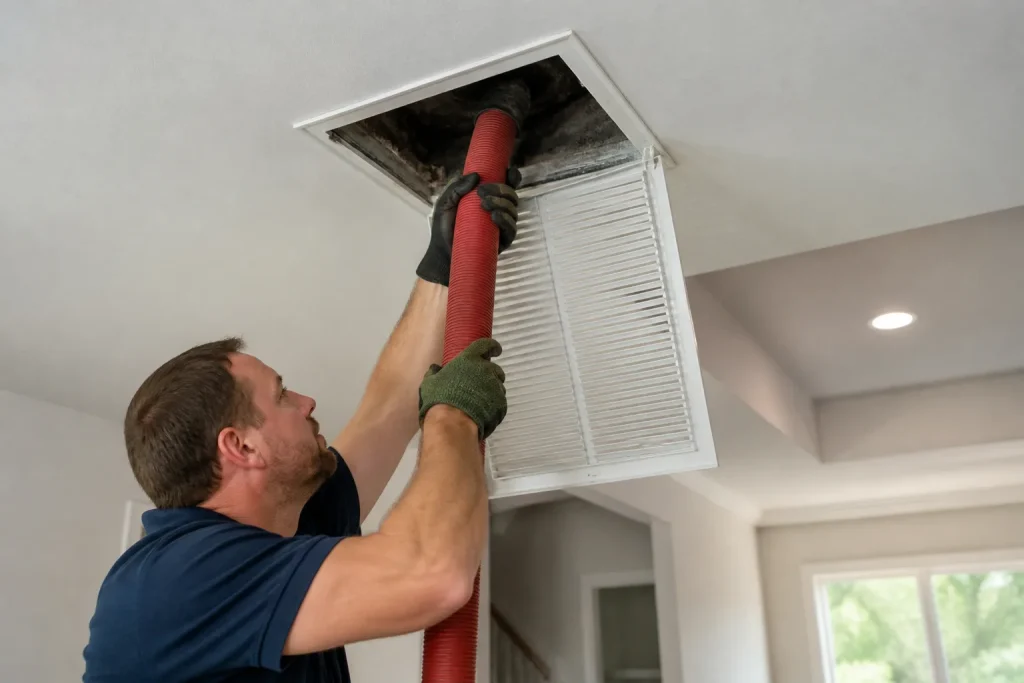
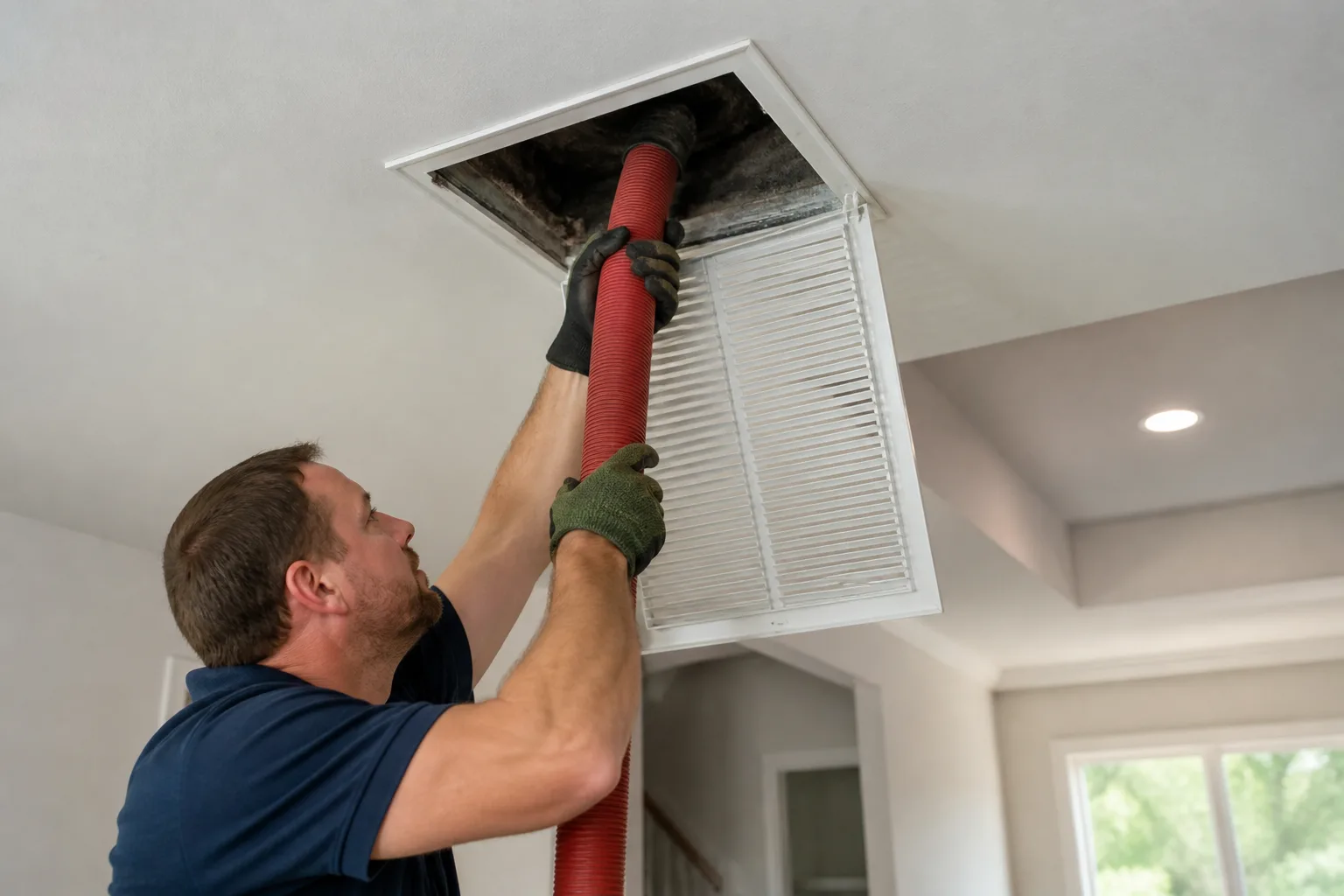
Emergency Air Duct Cleaning Near Me: What Southeast Raleigh Homeowners Should Do First
After a house fire or a sewage backup, the instinct to clean everything fast makes sense. But starting with the ducts before containment and assessment are documented can put your insurance claim at risk. A genuine duct emergency is rare, and when one happens, the order of your calls matters more than the speed of the cleaning. Here’s the sequence that protects both your family and your coverage. Let’s get into it.
If you’d rather not sort through this alone, call (866) 937-7160. We answer 24/7. Fast dispatch from 7am to 7pm, Sunday through Friday.
What actually counts as a duct emergency in Southeast Raleigh?
Four situations qualify as a true duct emergency: smoke and soot contamination after a house fire, sewage backup that has reached the duct system, a confirmed rodent or pest infestation inside the ductwork, and any spill or release of a hazardous material that has been drawn into the return air. Each of these involves contamination that a standard vacuum will spread rather than remove.
Here in Southeast Raleigh, older housing stock and mature tree canopy make rodent intrusion into ductwork a recurring problem. Squirrels and mice find their way into attic runs, and by the time a homeowner notices scratching or a musty smell, droppings and nesting material are already inside the system. That’s contamination, not just dirt.
Equally common are the situations that feel like emergencies but aren’t. Heavy dust blowing from a register after a renovation, a musty odor that comes and goes, visible dust on a ceiling vent – these deserve prompt attention, but they don’t carry the contamination risk of a fire, sewage event or infestation. Knowing which category you’re in tells you who to call first.
Urgent but not an emergency
- Drywall dust or construction debris in the ducts after a remodel
- A persistent musty smell with no visible water event
- Lint buildup behind the dryer that hasn’t caused a fire risk yet
- Visible dust streaks around supply registers
Those get scheduled. The four true emergencies get triaged.
Who should you call first: insurance, remediation, or a duct cleaner?
Call your insurance company first. Every time. Before you call a duct cleaner, before you run the HVAC system, before you touch anything you don’t have to touch. Your insurer needs the loss documented in its pre-cleaning state, and cleaning that happens before that documentation is recorded can complicate a claim.
The typical order looks like this:
- Your insurer. Report the loss, ask what documentation they require, and get a claim number before any work begins.
- A remediation professional (for fire, sewage, or hazardous material events). Remediation contains the source and stabilizes the environment. This is a different discipline from duct cleaning and often comes first.
- An HVAC specialist to assess whether the system itself was damaged or needs to stay off until remediation is complete.
- A duct cleaning specialist equipped for contamination, once the source is contained and remediation has cleared the system for cleaning.
Skipping to step four is the most common mistake we see. A standard residential duct cleaning crew working in a post-fire or post-sewage home without containment can aerosolize contaminants that were settled, spreading soot or pathogens through the living space. Ringing up a general duct cleaner before the assessment is on record is exactly the move that can cost you.
What should you do with your HVAC system before a professional arrives?
Shut it down completely. Turn the thermostat to off, not to fan, and don’t run it again until a professional has assessed the system. Running the blower after a fire, sewage event or pest discovery pulls contaminated air from the ducts and pushes it through every room in the house.
Here’s the practical sequence for those first hours in Southeast Raleigh:
- Switch the thermostat to off. Not heat, not cool, not fan.
- Don’t open registers or vents to “air things out” – that spreads settled contamination into the room.
- Keep people and pets out of affected rooms until you’ve spoken with your insurer and a remediation professional.
- Don’t wipe down or clean duct surfaces, registers, or the air handler before you’ve documented them.
- Leave the system door closed and the filter in place.
A house that smells like smoke or sewage is not a house where you want the air handler running. The system is off until someone qualified says otherwise. That’s the whole rule.
How do you document the damage yourself to protect your insurance claim?
Photograph everything before anyone touches it, and record timestamps. Insurance adjusters need to see the loss in its original condition, and your own documentation is often the difference between a smooth claim and a disputed one. This is one of the few parts of an emergency you can and should handle yourself.
Documentation steps that hold up:
- Photograph each affected room, including ceilings, walls, and floors, before any cleanup.
- Photograph registers, vent covers, and the air handler as they sit – don’t move anything first.
- Start a written log with dates and times: when you discovered the problem, when you called your insurer, when each professional arrived.
- Save every receipt for temporary measures – fans, air scrubbers, hotel stays if the home is uninhabitable.
- Keep your claim number and adjuster contact in one place.
Don’t clean first and photograph later. Once soot or contamination is wiped away, its extent is very hard to establish. A couple of extra minutes with a phone camera protects the claim.
How do you verify a company is equipped for emergency contamination cleaning?
Ask what equipment they use and whether it captures contaminants or redistributes them. A company equipped for emergency contamination uses negative-air machines and HEPA filtration to contain what it pulls out of the system. A company with a truck-mounted vacuum and no containment plan is set up for routine cleaning, not a post-fire or post-sewage environment.
The equipment that matters:
- Negative-air and HEPA filtration. Abatement Technologies equipment is the class used in remediation work – it captures contaminants instead of blowing them back into the room.
- Professional-grade duct cleaning systems. Rotobrush and Nikro are industry-recognized systems built for real ductwork, not consumer-grade shop vacs.
- A defined containment plan. Ask where the contamination goes during the job. A crew that can’t explain this isn’t equipped for the job.
Ask one direct question: “What’s your containment plan for a contaminated system?” A routine cleaning company will describe the vacuum. A company equipped for this work will describe negative pressure, HEPA filtration, and where the debris is going. That answer tells you everything you need to know before you put a contamination crew in your house in Southeast Raleigh.
Our technicians have up to 13 years of experience, and we use Rotobrush and Nikro systems with Abatement Technologies HEPA filtration on every contamination job.
When to call a pro
If the problem is soot, sewage, pest infestation, or a hazardous release, don’t wait. Call (866) 937-7160. We answer 24/7. Fast dispatch from 7am to 7pm, Sunday through Friday. Free estimates, and the price is set per job in a written estimate before any work starts.
What about the urgent-but-not-emergency cases in Southeast Raleigh?
For construction dust, a chronic musty smell, or a skipped cleaning, there’s no emergency sequence to follow. Schedule air duct cleaning when it’s convenient, and address any underlying moisture or airflow issue at the same time. A single visit that covers cleaning, HVAC cleaning, and duct sealing handles the whole forced-air system rather than one piece of it, which cuts down on repeat service calls.
One more: if the dryer has been running slow and the lint trap fills faster than it should, that’s a fire-risk conversation, not a cleaning preference. We treat dryer vent cleaning as a dedicated service for exactly this reason, and it’s often left off the list by companies that treat it as an afterthought.
The Bottom Line
Four situations count as a true duct emergency: fire and soot, sewage contamination, rodent infestation, and a hazardous release. For all of them, the order is the same: insurance first, remediation second, HVAC assessment third, and a duct cleaner equipped for contamination last. Shut the system down, document everything with photos and timestamps, and verify the crew’s containment plan before you let them near the ducts.
For a routine case, book the cleaning and move on. For the serious ones, get the sequence right.
If you’re in Southeast Raleigh and need help, Air Duct Cleaning Southeast Raleigh offers free estimates. Call (866) 937-7160 for your exact quote. We answer 24/7. Fast dispatch from 7am to 7pm, Sunday through Friday.
Frequently Asked Questions
No. Report the loss to your insurer and document the damage first, then let a remediation professional contain the source before any duct cleaning begins. Cleaning before that assessment is recorded can complicate your claim and spread contaminants through the home.
No. Turn the thermostat to off and leave it off until a professional assesses the system. Running the blower pulls contaminated air from the ducts and distributes it through every room in the house.
A true emergency involves fire soot, sewage contamination, a confirmed rodent or pest infestation, or a hazardous material release inside the ductwork. Dust, a musty odor, or lint buildup are urgent but routine – they get scheduled, not triaged.
Pricing depends on the scope of the contamination and the size of the system, so we set it per job with a written estimate rather than quoting a flat number here. Contamination jobs that involve HEPA containment and remediation coordination typically cost more than a routine whole-system cleaning. Call (866) 937-7160 for an exact quote – estimates are free.
Related services in Southeast Raleigh: Air Duct Cleaning Southeast Raleigh covers the full range of forced-air work, from routine cleaning to sealing and repair.
Written by the team at Air Duct Cleaning Southeast Raleigh.
Need Air Duct Cleaning Help?
Call Air Duct Cleaning Southeast Raleigh - the local pro we connect you with is licensed and insured, here with fast help in Southeast Raleigh.
(866) 937-7160