
Abatement Technologies Air Duct Cleaning in Southeast Raleigh: A Homeowner’s Guide
Most homeowners in Southeast Raleigh who ask about Abatement Technologies equipment want to know one thing: does it actually clean the ducts, or is it just a name on the van? The honest answer is that Abatement Technologies negative air machines do a specific job that standard vacuums can’t match. They hold the dust you’re trying to remove under containment and filter it through HEPA stages instead of letting it settle back into your rooms. That difference is measurable in the air, not just in the estimate. If you’d rather not sort through the claims yourself, call (866) 937-7160.
What Does an Abatement Technologies Negative Air Machine Actually Do?
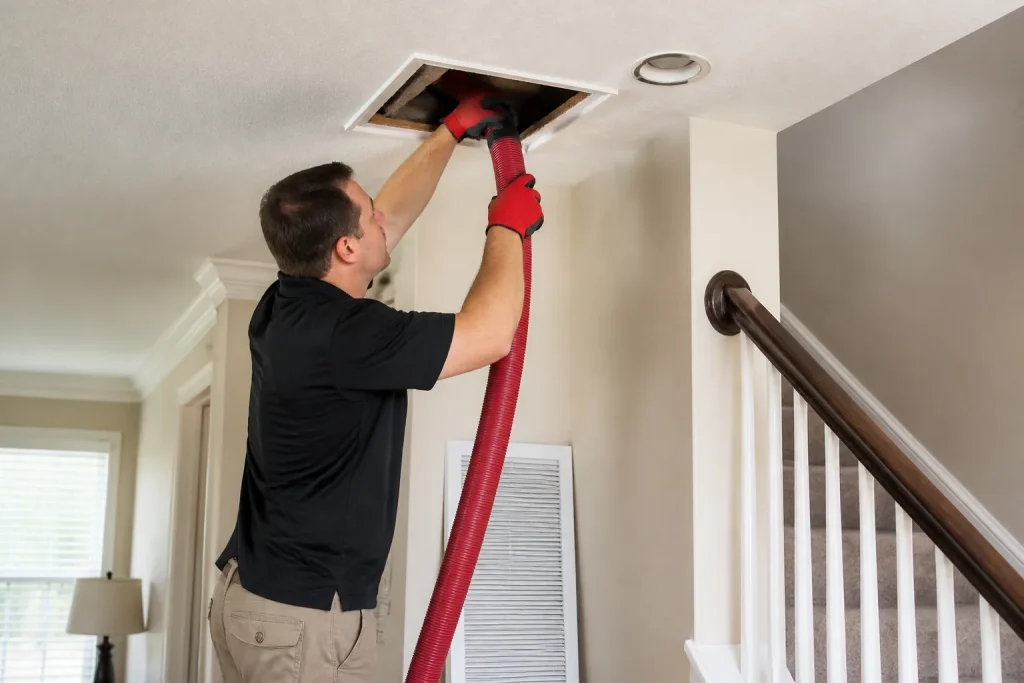
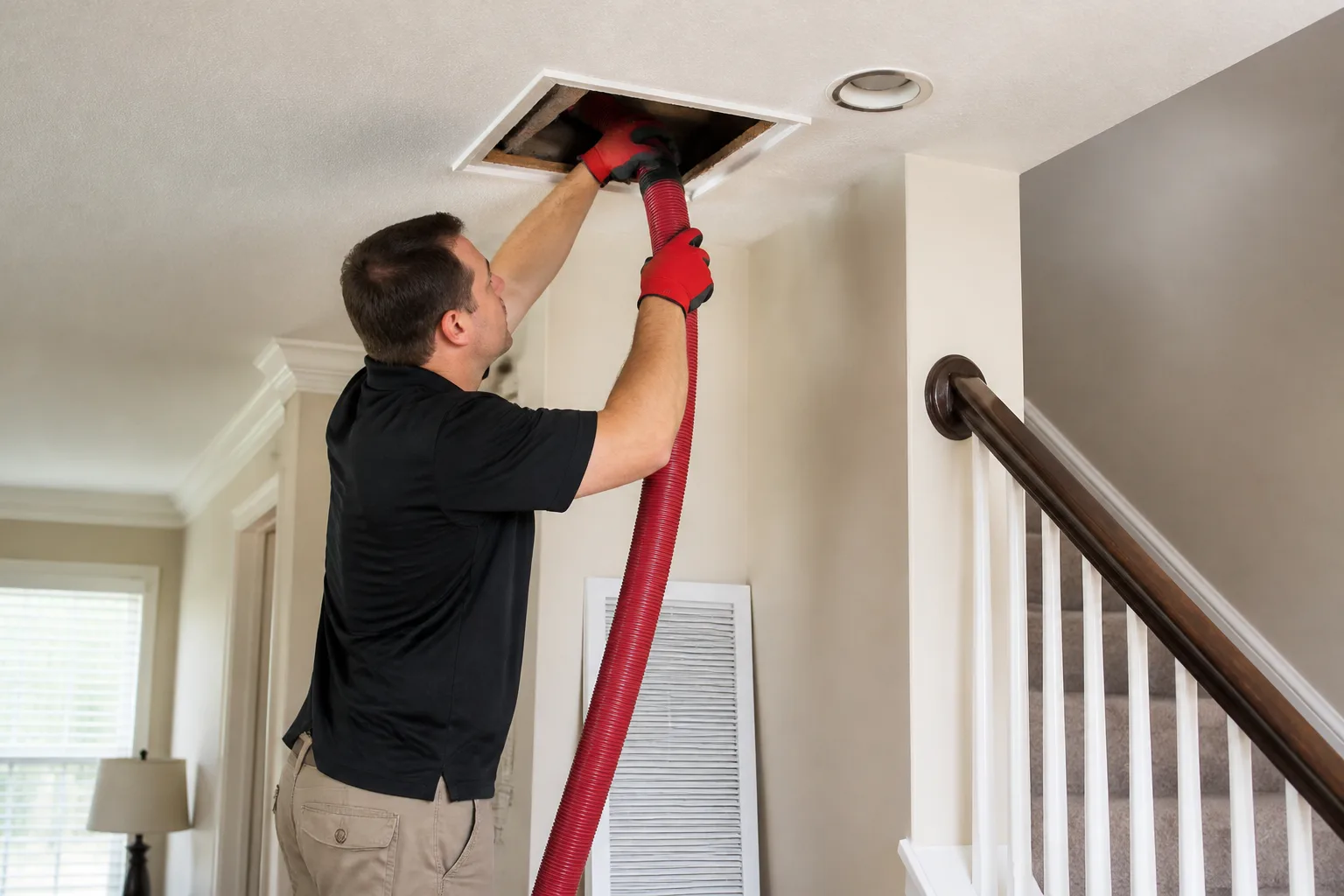
An Abatement Technologies negative air machine pulls a continuous vacuum on the duct system and pushes the captured air through HEPA filtration before it leaves the equipment. The key word is “negative”: while your ducts are being brushed and agitated, the machine keeps the duct interior at a slight pressure below the rest of the house. That pressure difference is what stops debris from drifting out of open registers and into your living space. Standard shop-vac setups often run at a fraction of the airflow and without true HEPA stages, so fine particulate stays airborne.
The numbers that matter to a homeowner in Southeast Raleigh come down to three things:
- Airflow capacity (CFM): Higher airflow keeps the brush head moving freely and carries loosened debris out instead of letting it re-settle. Consumer vacuums usually can’t sustain that pull through long duct runs.
- HEPA filtration stages: Multi-stage filtration captures fine particles, not just visible dust bunnies. The finest stage is where the real difference lives.
- Containment pressure: The machine holds the whole system under negative pressure, so contamination has one direction to travel: out of your house and into the filter.
We use Abatement Technologies equipment alongside Rotobrush and Nikro systems because each does a different part of the job. Rotobrush handles the agitation and contact cleaning inside the ducts. Nikro supplies the high-capacity extraction. Abatement handles the containment and HEPA capture that ties it together. Used as a set, they turn a messy job into a controlled one.
Why Does Negative Pressure Matter During Duct Cleaning in Southeast Raleigh?
Negative pressure matters because duct cleaning done without it can make the problem worse before it gets better. Every time a brush or air whip disturbs the inside of a duct, dust and debris that had settled get lifted into the air stream. If there’s no containment machine running, much of that debris blows out of the nearest register and into the room. You paid for a cleaning and ended up with a fine layer of dust over the furniture. That’s the cross-contamination problem.
In older Southeast Raleigh homes, where forced-air systems often run through long runs in attics and crawlspaces, the risk is higher. Debris that has built up for years doesn’t stay put once it’s disturbed. A negative-air setup works like a lid on a pot: the mess is contained where it’s happening, not spread through the house. The HEPA stage then traps what the machine pulls out.
This is why we treat containment as the first decision on any job, not an optional upgrade. From cleaning to sealing, the whole point is to remove what’s actually in the ducts and keep it removed. A homeowner who wants a straight answer about what’s in the system should expect a professional to explain containment before touching a brush.
When Is Abatement-Grade Equipment Essential, and When Is It Not?
Lighter equipment can be fine for some jobs, and we’ll say so. A newer home with a short, simple duct run and light surface dust may not need the heaviest containment setup. But several situations push a job into the “professional-grade” category, and this is where the difference shows:
- Post-renovation cleaning: Drywall dust, sawdust, and construction debris get pulled through the system during a remodel. That fine particulate is exactly what standard vacuums struggle to contain.
- Older homes with heavy buildup: Years of accumulated debris release a lot of material the moment it’s disturbed. Containment is what keeps it out of your rooms.
- Allergy or respiratory concerns: When the goal is meaningfully cleaner air, the cleaning has to actually remove fine particles, not just visible dust.
- Systems with contamination in the plenum and main trunk: A short vacuum pull at the registers can’t reach these areas. You need high airflow and a proper containment machine.
- Combined jobs: If we’re also doing dryer vent cleaning, the same equipment class handles both, so one visit covers the whole system.
For a basic inspection or a light-touch cleaning in a newer Southeast Raleigh home, we’ll often say the lighter setup is enough. The right call depends on what’s in the system, not on selling you the biggest job.
How Do You Verify a Company Actually Uses This Equipment?
The fastest way to verify a company is to ask to see the equipment, or ask a direct question about it. “Do you use Abatement Technologies negative air machines, and can you describe how they’re set up?” is a fair question. A company that actually runs the gear will answer easily and specifically. A company that drops brand names into its ads because they sound official won’t be able to explain the setup.
Here’s what to look for when comparing quotes for air duct cleaning:
- Ask what’s used on-site. A real professional-grade duct cleaning setup should include an agitation tool (Rotobrush or similar), high-capacity extraction (Nikro), and a HEPA containment unit. If the answer is “a powerful shop vac,” that’s not the same thing.
- Ask about HEPA filtration stages. A quality machine has multiple stages. A single filter bag isn’t the standard.
- Ask for before-and-after visuals. Photos of your own ducts, not stock images, showing what was captured and what the interior looks like now.
- Ask about containment during the job. Registers should be sealed or covered while the machine runs, and you should be able to explain to a neighbor what’s happening in your house.
- Check the truck or van. Equipment that isn’t present at the residence isn’t being used at the residence.
Worth saying plainly: consumer-grade shop vacs cannot deliver the airflow or filtration of professional equipment. That doesn’t make every company using them a bad actor. It does mean you should know what you’re paying for.
What Should You Notice After a Cleaning With Proper Containment?
Homeowners in Southeast Raleigh who’ve had a proper containment cleaning often describe the same handful of differences. Loose dust stops settling on flat surfaces as quickly. Rooms near the return registers feel less “stuffy.” Anyone in the house with seasonal allergies usually notices the shift before anyone else does. But the reliable objective change is the one you can’t see: the amount of fine particulate the machine pulled out of the system and captured in the HEPA stages.
Some things you shouldn’t expect to change. Duct cleaning won’t fix a failing HVAC unit, and it won’t lower your energy bill by a noticeable amount on its own. It also won’t solve a humidity problem or a leak in the attic. What it can do is give you a system that’s actually clean inside, with the mess contained where it belongs. That’s the practical meaning of a cleaning done with professional equipment rather than a cosmetic pass over the registers.
We combine the cleaning with an air quality and sanitizing step using Honeywell and Aprilaire-compatible solutions, so the same visit can address the air quality piece as well. And because we also handle HVAC cleaning, a visit covers the full forced-air system, not just the ducts. We’ve found that homeowners who only have one piece handled often end up calling a second company within the year. One visit, complete system, is a better outcome.
When to Call a Pro
Call a professional if you’re seeing visible dust blowing out of registers, if your system hasn’t been cleaned since before a major renovation, if anyone in the house has persistent allergy symptoms, or if you simply can’t recall when the ducts were last cleaned. All of those cases warrant an inspection at minimum. Duct cleaning isn’t a job worth tackling yourself; the containment is the safety feature, and it’s what you’re paying a professional to provide.
The Bottom Line
Abatement Technologies equipment gives your duct cleaning job something a shop vac can’t: real containment, HEPA-level capture, and airflow strong enough to move what’s actually in the system. When you see it named in a quote, ask how it’s set up. The answer tells you most of what you need to know. In our experience, the difference between a duct that looks cleaner and a duct that’s actually cleaner is the equipment and how it’s used. If you’re in Southeast Raleigh and need help, Air Duct Cleaning Southeast Raleigh offers free estimates. Call (866) 937-7160. We answer 24/7. Fast dispatch from 7am to 7pm, Sunday through Friday.
Frequently Asked Questions
It’s used for negative air pressure and HEPA filtration. While the ducts are being cleaned, the machine keeps the system under slight negative pressure so loosened dust and debris stay inside the duct and get captured through multiple filter stages rather than escaping into the rooms. It’s the same equipment class used in remediation work.
Yes, in airflow capacity, filter efficiency, and containment. A consumer shop vac can’t sustain the airflow needed to move debris through long duct runs, and it doesn’t run multiple HEPA stages. The practical result is that a shop vac tends to redistribute fine dust into the air, while a containment machine captures it.
Cost depends on the size of your system, the number of vents, the level of buildup, and how many service lines you need. We quote one flat price per system before any work starts, so the final number is the number we agree on. Call (866) 937-7160 for an exact quote. Estimates are free.
Not necessarily. A newer home with a short, clean system often needs less than a householder expects. The right call is to have the system inspected and then decide. Renovation dust is one of the few things that can put even a newer Southeast Raleigh home in the “yes, seriously” column.
You should ask for it, and you should get it. Quality providers photograph the interior of your own ducts before and after the cleaning, and the images are your evidence that the work actually happened. If a company can’t produce that, ask why.
Written by the team at Air Duct Cleaning Southeast Raleigh.
Need Air Duct Cleaning Help?
Call Air Duct Cleaning Southeast Raleigh - the local pro we connect you with is licensed and insured, here with fast help in Southeast Raleigh.
(866) 937-7160